Outdoor teak furniture can remain strong for years, yet its screws, bolts, or hinges may corrode much sooner. For coastal retailers, rust stains and jammed fittings can turn a well-made product into a customer complaint.
The stainless steel vs galvanized screws decision is therefore more than a price comparison. This guide helps buyers compare corrosion resistance, costs, and when 304 or 316 stainless steel makes sense.
You will learn what to specify for different teak furniture designs and how to check hardware before bulk production. These decisions are worth discussing early with an Indonesian Furniture Supplier.
Why Fastener Selection Matters for Coastal Teak Furniture
Salt carried by sea air settles on exposed and hidden connections. Humidity and water trapped around screw heads, washers, and hinges can keep those areas wet, even when furniture sits under shelter.
Corrosion may leave brown marks on teak, reduce the reliability of joints, or make moving parts harder to operate. A chair frame may still be sound while a corroded hinge or bolt causes a functional problem.
For retailers, these issues can mean replacement components, warranty claims, returns, and disappointed customers. A small hardware saving at production can become a larger after-sales cost.
Stainless Steel vs Galvanized Fasteners: What’s the Difference?
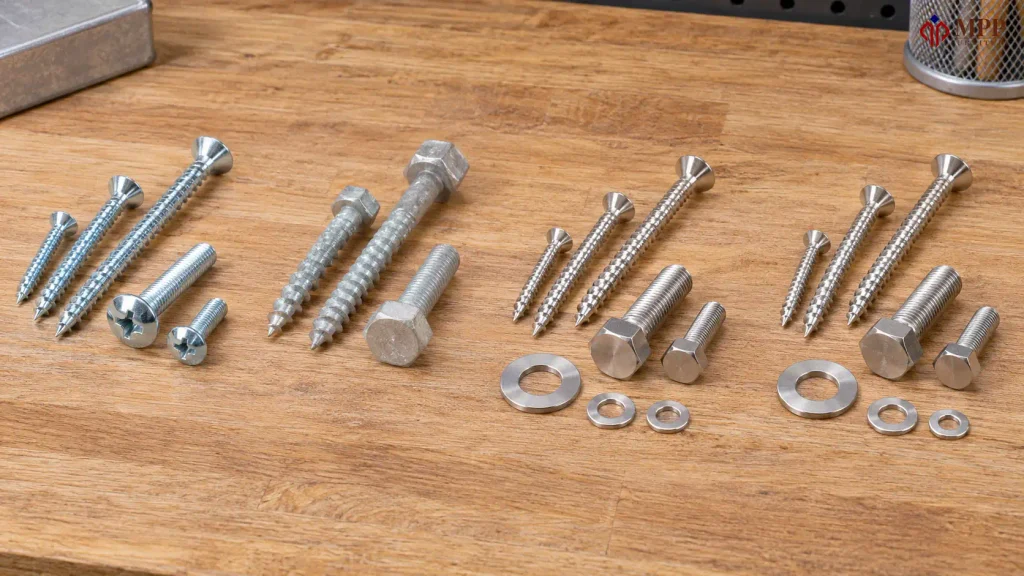
Not all galvanized screws for outdoor use offer the same protection. Zinc-plated and hot-dip galvanized steel use a protective zinc coating, while stainless steel resists corrosion through its alloy composition.
| Material | Corrosion resistance in coastal exposure | Relative cost | Typical suitability |
| Zinc-plated steel | Limited in regularly wet, salty conditions | Low | Protected, mild environments |
| Hot-dip galvanized steel | Generally better than thin zinc plating; coating wears over time | Low to medium | Selected outdoor fittings if coating and fit are suitable |
| 304/A2 stainless steel | Good in milder outdoor conditions; more vulnerable to chlorides | Medium to high | Sheltered locations with limited salt exposure |
| 316/A4 stainless steel | Better resistance to chloride-related corrosion, but not immune | Higher | More demanding coastal exposure |
The American Galvanizers Association explains that zinc coating thickness affects service life. Hot-dip galvanizing may also affect surface appearance and the fit of threaded components.
A2 and A4 are stainless fastener grade families commonly associated with 304 and 316 alloys. Buyers should also specify dimensions and mechanical strength, because corrosion resistance alone does not make a connection suitable.
When Should Coastal Retailers Specify 304 or 316 Stainless Steel?
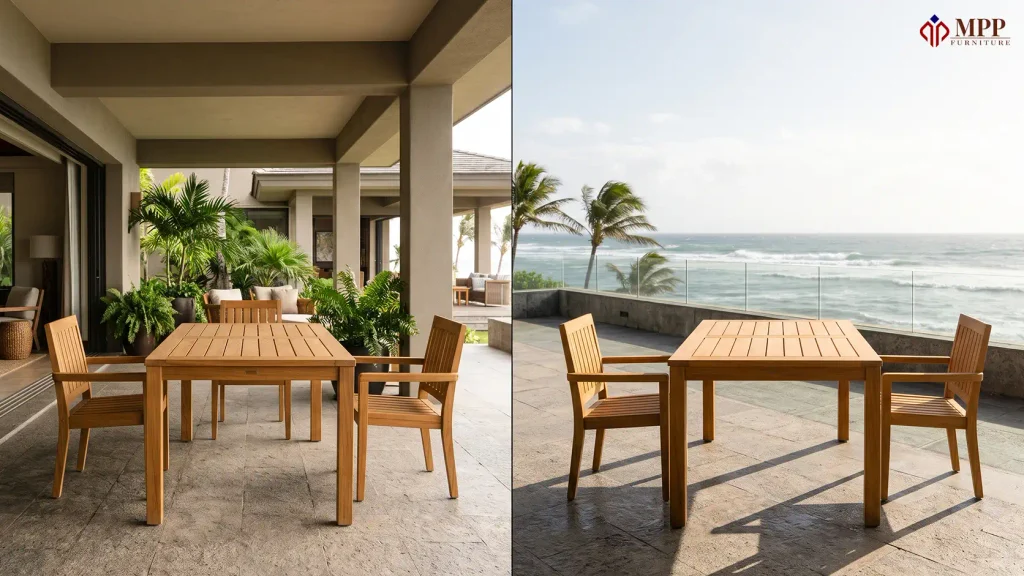
When comparing 304 vs 316 stainless steel screws, start with actual exposure. For sheltered terraces with limited salt deposits, 304/A2 stainless steel screws for outdoor furniture may be suitable if connections drain and can be cleaned. Actual exposure matters more than distance from the shoreline alone.
For furniture facing sea spray or holding salty moisture inside joints, 316/A4 is generally the safer starting point. The British Stainless Steel Association prefers 316 over 304 where chloride levels are higher, although even 316 can stain or corrode in severe conditions.
In January 2026, we received a quotation inquiry from a Maldives buyer who initially requested 304 stainless steel hardware for outdoor teak furniture. Because the intended location was close to the sea, we recommended 316 for better chloride resistance while taking the buyer's target price into account. This remained a quotation discussion; no final hardware approval was confirmed.
Which Fasteners Should Be Specified for Different Teak Furniture?
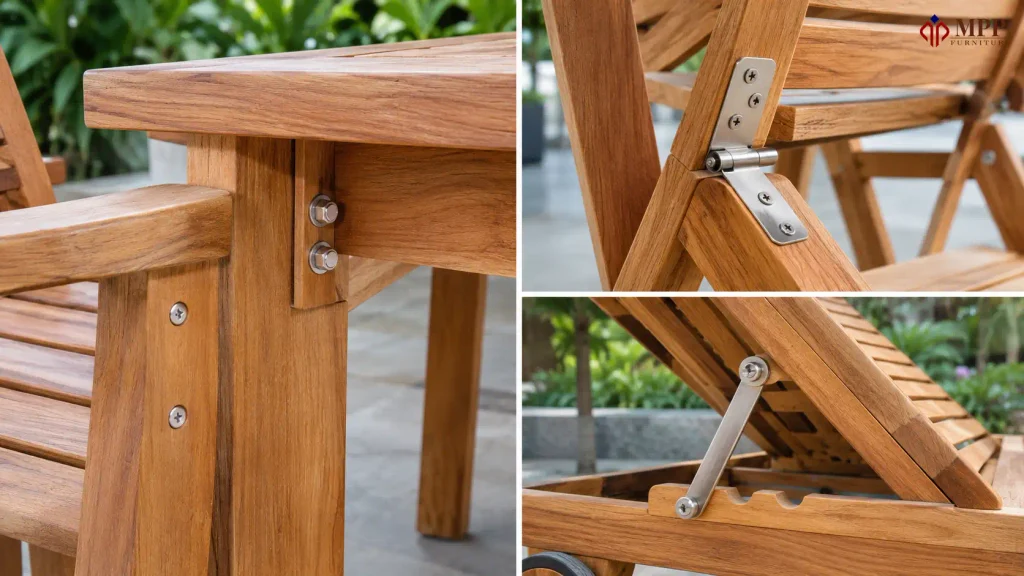
The right grade is only part of the specification. Screws, bolts, washers, and moving components also need suitable strength, dimensions, and compatible materials.
Fixed Teak Chairs and Tables
Check exposed screws, structural bolts, washers, and assembly connectors, especially where joints can hold water. The stainless steel vs galvanized bolts comparison matters for detachable table legs, where threaded connections may remain damp. Avoid assuming a stainless bolt and galvanized washer will perform equally well together in wet conditions.
Folding Furniture and Adjustable Loungers
Hinges, pivots, locks, and reclining mechanisms need to move smoothly after repeated outdoor use. Our teak garden furniture construction guide describes CNC-supported machining for detachable connections and recommends functional checks for folding components. Buyers should review material compatibility and operation on an approved sample.
How Fastener Selection Affects Manufacturing Cost and After-Sales Risk
Zinc-plated hardware may cost less upfront, while stainless grades often require a higher purchasing budget. But hardware is only one part of a furniture unit's manufacturing cost.
Changing selected exposed fittings from 304 to 316 does not mean the finished furniture price rises by the same percentage as the hardware cost. A different hinge assembly, however, may also require changes to sourcing, machining, or fitting.
Corrosion-related staining, stuck mechanisms, replacement parts, and returns should be part of the buying decision. As our teak poolside furniture quotation guide explains, buyers need equivalent hardware specifications before comparing manufacturers' FOB prices.
How to Verify Fastener Specifications Before Bulk Production
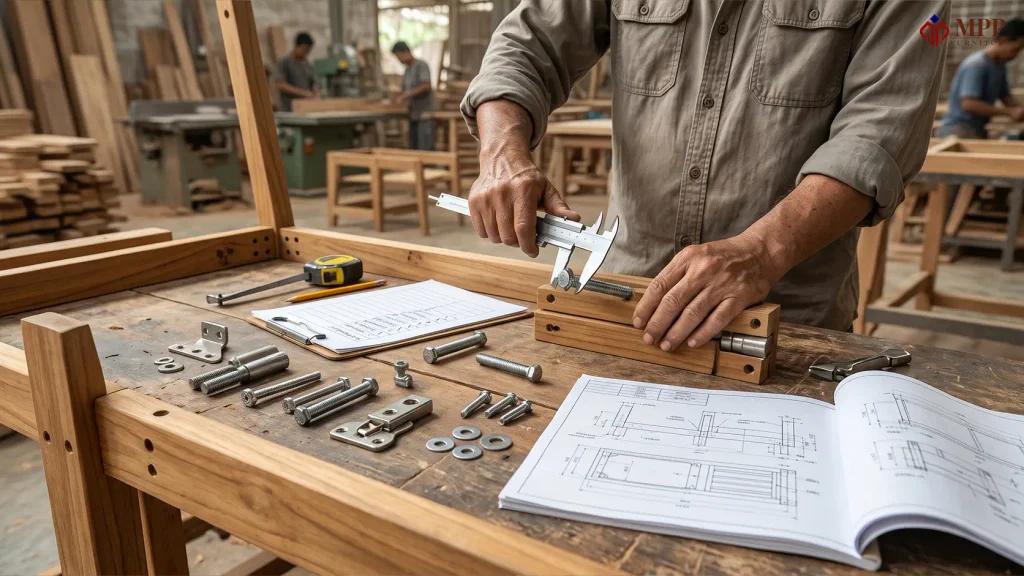
Ask suppliers to identify the stainless grade or zinc coating type, part dimensions, thread details, and required strength class. Request material declarations, relevant certificates, or traceable batch information when appropriate; neither appearance nor a simple magnet test reliably distinguishes 304 from 316.
List screws, bolts, washers, hinges, and connectors in the approved bill of materials (BOM). Compare the hardware with the physical sample, note justified differences between SKUs, and require written approval before any material or grade substitution.
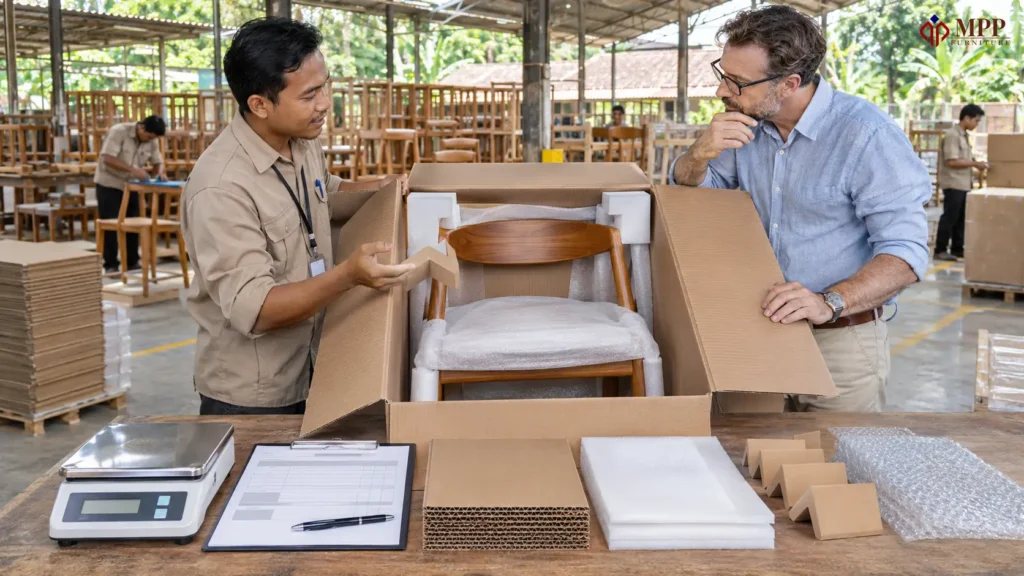
Our earlier teak chair development work documents sample checks for dimensions and joint placement. Buyers from France, the US, and Sweden have also inspected furniture construction and function at our factory before mass production. Those experiences support a practical rule: document what is approved, then check what is produced.
Final Thoughts: Specify Fasteners Based on Exposure, Not Price Alone
The stainless steel vs galvanized fasteners comparison should account for exposure, joint design, and future maintenance or claims. Compare complete hardware specifications and approve changes before bulk production.
Discuss Your Outdoor Teak Furniture Fastener Specifications With MPP
Share your drawings, SKU list, target market, intended coastal exposure, and hardware requirements with MPP Furniture. We provide free consultation and product development, supported by in-house manufacturing, skilled craftsmanship, and quality checks throughout production. Our team can discuss material options and specification requirements before you approve a production order.
FAQ: Outdoor Teak Furniture Fasteners
1. Can 316 stainless steel fasteners still develop rust or staining near the ocean?
Yes. Salt deposits, trapped moisture, surface contamination, and poorly drained joints can cause staining or localized corrosion even on 316 stainless steel. Good design and regular cleaning help reduce these risks.
2. Can buyers identify 304 and 316 stainless steel fasteners by appearance or magnet testing?
No. Stainless steel grades 304 and 316 can look alike, and magnetic response is not a reliable way to distinguish them. Ask for supplier documentation or suitable material testing to verify the grade.
3. Can stainless steel bolts be used together with galvanized washers or other metal components?
They can be assembled, but moisture between dissimilar metals can increase galvanic corrosion risk, particularly for zinc-coated parts. Review the full connection and use compatible components for the intended exposure.
4. What supplier documents can buyers request to verify stainless steel fastener grades?
Ask for a material declaration identifying the grade and standard, supplier part numbers, and lot or batch traceability. Depending on purchase requirements, request material certificates or independent test results.
5. Does changing fastener grade after sample approval require another inspection or approval?
Yes. A grade change alters the approved specification. Buyers should require written approval, updated BOM records, and inspection or testing of the affected parts before bulk production.

A versatile content creator with a strong foundation in product photography and videography, and a comprehensive brand strategy. Capable of creating engaging content to connect consumers and producers, web analytics, and engaging visual content to drive interest and growth for a product or brand.

0 Comments