Weather resistant outdoor furniture is not only about choosing teak, rope, or outdoor fabric. From MPP’s experience, many buyers still judge outdoor furniture by teak material and design first, while the bigger risk often comes from construction, material combination, finishing, rope tension, cushion behavior, and packing. For retailers and importers, performance depends on how the full product is specified, produced, finished, packed, and shipped by an Indonesian Outdoor Furniture Manufacturer.
Unlike a product category guide, this article works as a sourcing checklist to help retailers evaluate the full weather resistance system before sample approval or bulk production.
A teak frame can still create complaints if the rope is indoor-grade, the cushion traps water, the finish is rushed, the hardware stains, or the packaging causes moisture marks during export. That is why buyers should not approve outdoor furniture only from appearance. They should check moisture content, construction, finishing, rope tension, cushion system, and packing before bulk production.
Why Weather Resistance Is More Than Choosing the Right Outdoor Material
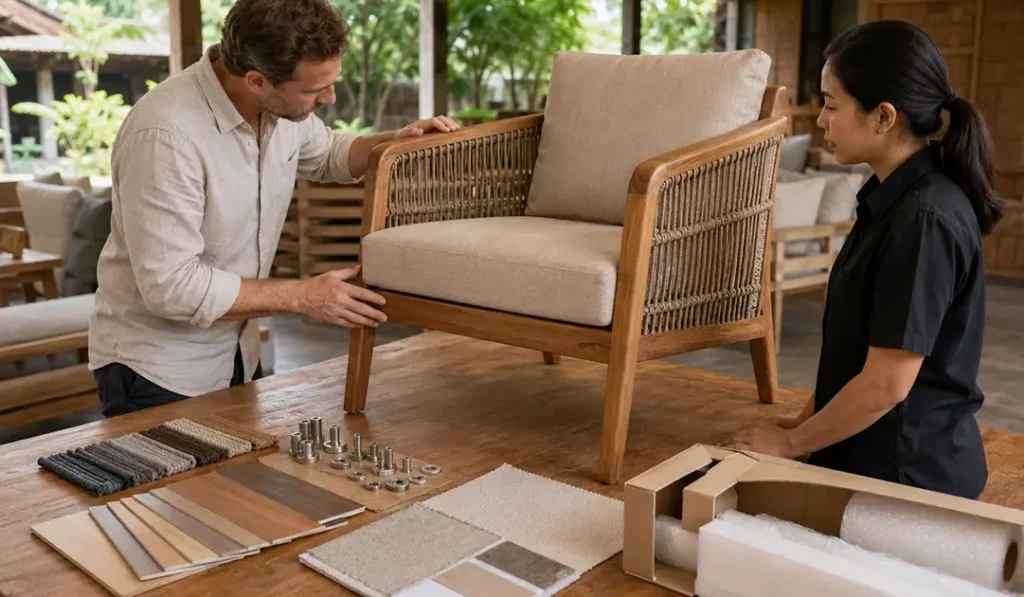
Weather resistant outdoor furniture is not proven by material name alone. Teak, outdoor rope, fabric, cushion foam, finishing, hardware, construction, and packaging must work together.
A product can use teak and still fail if the rope loses tension, the cushion traps water, the finish peels, the hardware rusts, or the packaging leaves moisture marks during shipment.
Outdoor exposure also affects wood at the surface level. The USDA Forest Service’s wood weathering reference explains that wood weathering is driven by several outdoor factors, including moisture, sunlight, heat, cold, abrasion, chemicals, and biological agents. This supports why retailers should evaluate outdoor furniture as a full production and finishing process, not only as a wood selection decision.
For retailers, outdoor furniture weather resistance affects complaints, returns, replacement costs, and trust in the collection. A small technical issue can become a larger sales problem when customers expect outdoor furniture to survive sun, rain, humidity, and daily use.
So buyers should not only ask, “Is this material weather resistant?” A better question is, “Can this manufacturer control the full outdoor furniture system before bulk production starts?”
Common Weather-Related Problems Retailers Should Anticipate
Weather resistant patio furniture can still face problems when the product is not prepared for real outdoor use and export handling. Common risks include UV fading, mold on cushions, peeling finish, rust stains, cracked teak, loose joints, rope sagging, and packing marks.
From MPP’s buyer discussions, especially with buyers from Australia, the US, and sometimes South Africa, many concerns come from bad experiences with other factories. Buyers have shared cases of uneven finishing, cracked wood, loose rope tension, color mismatch, and moldy cushions.
In MPP’s view, these problems often start before the furniture reaches the customer. Wood may crack when moisture content is not controlled around 10% to 12%. Finishing may show marks when products are packed before the coating is fully dry. Rope may loosen when weaving tension is not stable, while cushions may grow mold when moisture is trapped.
Retailers should also separate normal outdoor aging from product failure. Teak turning silver-grey over time is normal. But fast peeling, deep cracks, mold inside cushions, rope sagging, and rust stains are warning signs that the specification, production control, or packing method needs review.
Outdoor Material Checklist: Teak, Rope, Fabric, and Cushions
Check the Teak Quality Beyond the Wood Name
Teak is one of the strongest wood choices for weather resistant outdoor furniture, but “teak” alone is not enough. Retailers should ask about teak grade, sapwood control, kiln drying, moisture content, board selection, and surface preparation.
Too much sapwood can increase risk because the wood has weaker natural oil concentration and lower density than mature teak heartwood. This may lead to faster cracking, weaker outdoor stability, and more customer complaints. That is why buyers sourcing Indonesian teak patio furniture should review teak quality before approving samples, not only after bulk production starts.
Check the Outdoor Rope Specification, Not Only the Weaving Style
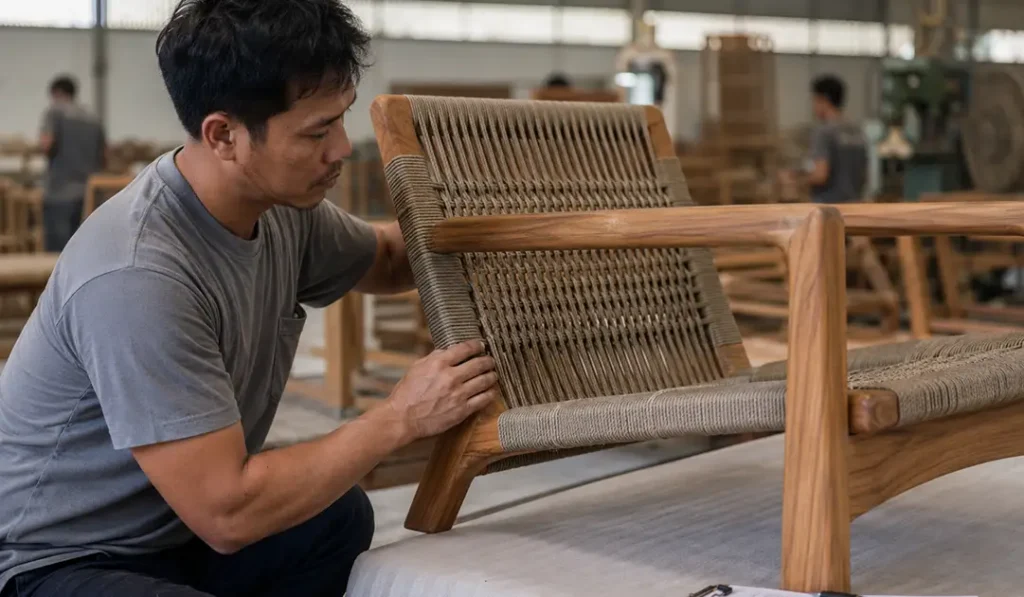
Outdoor rope can make teak furniture look lighter and more modern, but it must be specified for real outdoor exposure. Retailers should ask whether the rope is UV-stabilized, water-resistant, mold-resistant, and able to keep stable tension over time. This is especially important in patio collections, where outdoor rope in Indonesian teak patio furniture works not only as a visual element, but also as part of the seating experience.
If the tension is not balanced or the anchor points are weak, the product may face sagging, joint stress, or cracking around holes. In practice, teak and rope outdoor furniture needs both material compatibility and production control so the final product looks good and performs well after shipment.
Check Fabric and Cushion Performance
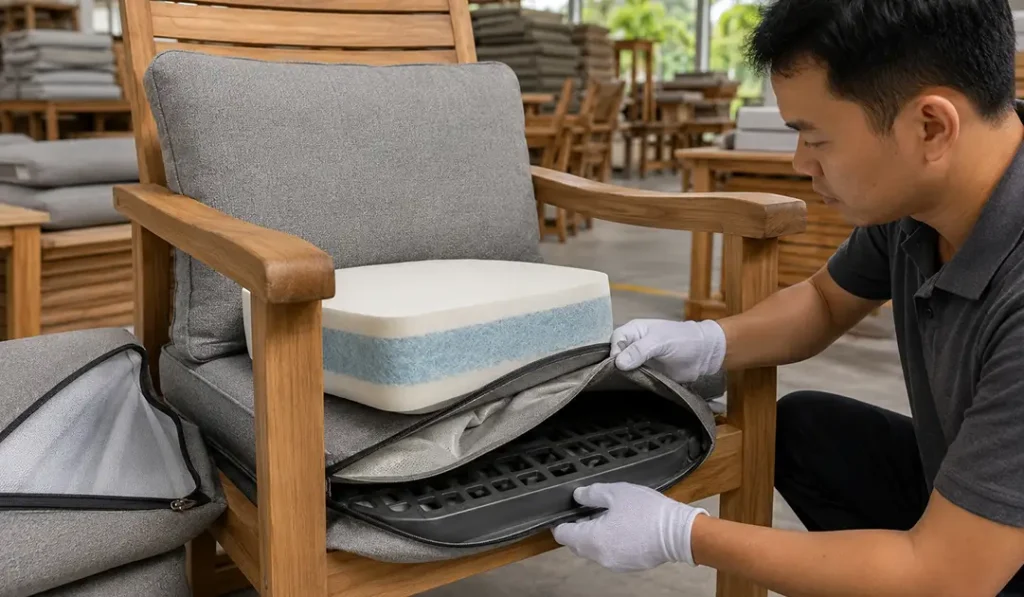
Outdoor fabric should not be chosen only by color, texture, or price. It needs to resist UV exposure, moisture, mold, abrasion, and repeated cleaning.
Cushions also need attention. Ask whether the foam is quick-dry or standard indoor foam. Check whether covers can be removed, cleaned, and dried. Look at seams, zippers, airflow, and how water exits the cushion after rain.
Production and Shipment Details That Affect Outdoor Furniture Weather Resistance
Material quality is only the starting point. In MPP’s production review, outdoor teak furniture is checked before sanding, assembly, and finishing.
The team reviews wood condition, grain direction, crack risk, pinholes, knots, warping, and moisture readiness. A board can look good visually, but it may still create risk if moisture or wood stability is not ready.
Finishing should be checked as a weather-resistance system, not only as a color sample. If the coating is packed before it is stable enough, the product may show pressure marks, sticky surfaces, trapped odor, uneven tone, or plastic and carton marks.
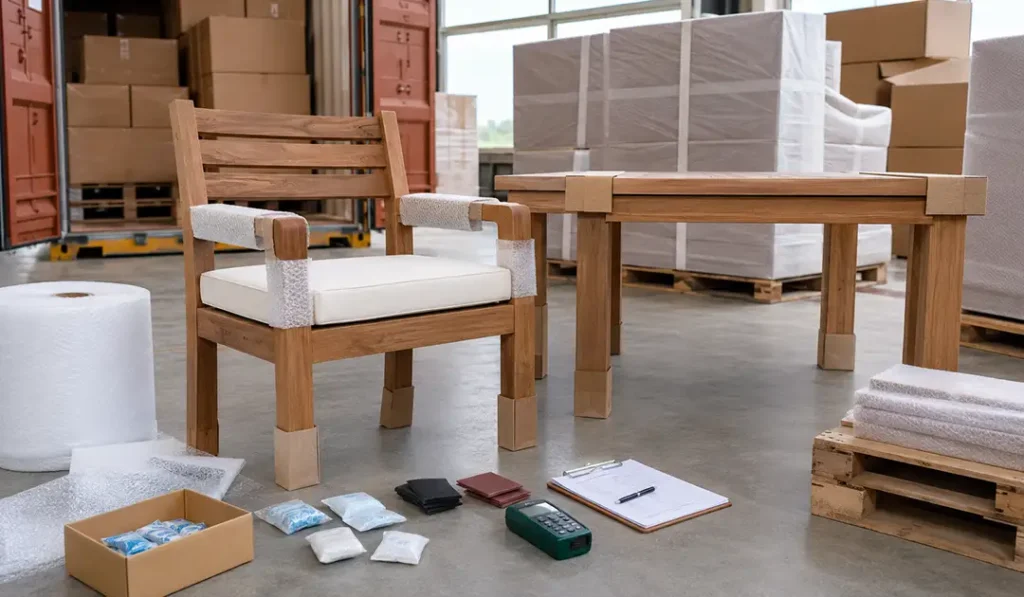
Construction and shipment checks also matter. MPP reviews joinery, frame thickness, support frame, seat base, drainage gaps, load areas, and hardware suitability for outdoor use.
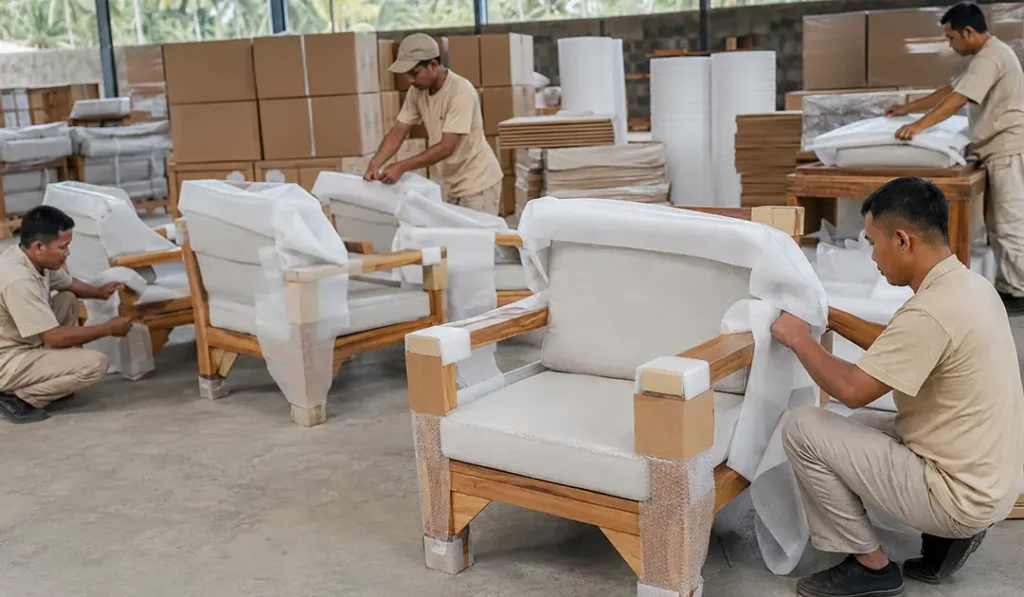
Packing protection may include dust covers, foam, carton layers, corner protection, or extra wrapping depending on product risk. MPP can also prepare step packing so bulk shipment follows the approved sample packing method.
In B2B sourcing, packing is not only a logistics task. It is part of risk control because outdoor furniture may face long transit time, container humidity, stacking pressure, and warehouse handling before it reaches the final customer.
Retailers should ask:
- Is MC tested with a moisture meter based on batch and risk areas?
- How do you prevent rough surfaces, sanding marks, and uneven finish absorption?
- Is the finish stable enough before packing, not only dry to the touch?
- Are joinery, support frame, drainage gaps, and load areas reviewed?
- Can you provide a step packing reference for bulk shipment?
Appearance also matters because bulk production should match the approved sample.
Before confirming color direction, retailers can review MPP’s guide on outdoor teak furniture finish appearance.
Natural Aging or Product Failure? What Retailers Should Understand
Outdoor furniture will age, but aging is not always product failure. Natural teak can slowly turn silver-grey, fabric may need cleaning, cushions may need drying, and the surface may change after sun and rain exposure.
Retailers should explain this clearly, so normal outdoor aging is not confused with defects. At the same time, fast peeling, deep cracks, mold inside cushions, rope sagging, and rust stains are warning signs that the product specification, production control, or packing method needs review.
| Normal Outdoor Aging | Possible Product Failure |
|---|---|
| Gradual teak silvering | Fast peeling or blistering |
| Mild color and surface change | Deep cracks or loose joints |
| Regular fabric and cushion care needed | Mold caused by trapped moisture |
| Cushion drying after rain | Cushion holding water too long |
Outdoor Furniture Sourcing Checklist: Questions to Ask Your Manufacturer
Before approving samples or bulk orders, retailers should ask how the manufacturer controls the details that affect outdoor performance. The goal is to confirm that the approved sample can be repeated in bulk production.
Ask these questions before ordering:
- Can you provide an MC test result for teak? MPP recommends around 10% to 12% moisture content for outdoor teak furniture.
- Has the frame passed an impact test? If not, can support frame be added before approval?
- Does the finish match the approved swatch and buyer’s requested tone?
- How do you check rope tension so the weaving stays stable across production?
- Are dust covers or extra protection used for the product and cushions during packing?
- Can you provide a step packing reference so bulk packing follows the approved sample shipment?
This checklist helps retailers avoid hidden sourcing risks, from cracked wood and loose rope to packing marks and shipment-related damage.
Final Thoughts: Weather Resistance Comes from the Whole Production System
Weather resistant outdoor furniture is not built by one material alone. Teak, rope, fabric, cushion foam, finishing, hardware, construction, and packaging must work together from sample approval to shipment.
For retailers, the safest sourcing approach is to review material grade, moisture control, rope specification, cushion drainage, finish curing, rust-resistant hardware, packing protection, and supplier quality control before placing an order.
This article can start as an awareness guide, but the next step is supplier evaluation. Buyers should ask how each production detail is controlled and how the approved sample will be repeated in mass production.
When your supplier understands outdoor material behavior and production risk, your collection becomes easier to sell, explain, and support after delivery.
Planning to source weather resistant outdoor furniture? Talk with MPP Furniture to review your product specs, finish direction, construction details, and packing needs before moving into bulk production.
Ready to Source Weather Resistant Outdoor Furniture?
MPP supports B2B buyers with consultation, product development, and custom design support, backed by a 99% client satisfaction rate and a 0.56% complaint ratio.
Talk with MPP Furniture to review your product specs, finish direction, construction details, cushion setup, and packing needs before moving into bulk production.
FAQs About Weather Resistant Outdoor Furniture
1. What makes outdoor furniture weather resistant?
Outdoor furniture is weather resistant when the full system can handle sun, rain, humidity, wet-dry movement, and regular use. This includes material selection, construction, finishing, hardware, cushion drainage, packing, and care guidance.
2. Is teak the best material for weather resistant patio furniture?
Teak is one of the strongest outdoor wood choices, but retailers should still check teak grade, sapwood ratio, moisture control, joinery, finish, and supplier quality control.
3. Why does outdoor furniture fail even when the material is good?
Outdoor furniture often fails because of weak specs, indoor-grade components, poor curing, trapped moisture, weak joinery, rusting hardware, or shipment damage. Good material still needs controlled production.
4. What should retailers ask before sourcing outdoor furniture?
Retailers should ask about teak moisture content, frame impact test, finish swatch approval, rope tension, cushion protection, packing method, and step packing reference.
5. Is weather resistant outdoor furniture maintenance-free?
No. Weather resistant outdoor furniture still needs cleaning, proper placement, cover use, and care guidance. Sun, rain, humidity, and daily use will age the product over time.
A versatile content creator with a strong foundation in product photography and videography, and a comprehensive brand strategy. Capable of creating engaging content to connect consumers and producers, web analytics, and engaging visual content to drive interest and growth for a product or brand.
0 Comments