Choosing between wooden vs upholstered headboards for your 2027 bedroom range is not as simple as following the latest design trend. A headboard that attracts attention in your showroom may still leave you with slow-moving stock, higher shipping costs, or unexpected returns.
Wooden designs bring natural texture and visible craftsmanship, while upholstered headboards appeal to customers looking for softness and comfort. But which one deserves more space in your next collection?
The answer depends on who your customers are, what they already buy, and how each design performs beyond the showroom. Let's compare the options from a retailer's point of view.
What Retailers Are Actually Choosing Between
Wooden headboards come in several forms, from solid wood panels and slatted designs to shaped frames with rattan or woven inserts. They offer different levels of texture, weight, and visual detail depending on the construction.
Upholstered headboards typically use a wooden frame with foam padding covered in fabric, leather, or performance textiles. They create a softer surface for customers who enjoy sitting up in bed to read or relax.
But the choice does not have to be strictly wood or fabric. A wooden frame with a padded or woven center can combine the visual appeal of natural materials with a more tailored bedroom look.
For retailers planning a wider collection, these options can also be developed around different sizes, finishes, and construction details. Our guide to custom bedroom furniture in Indonesia explains how those specifications can be adjusted during product development.
Where Each Type Tends to Sell Well
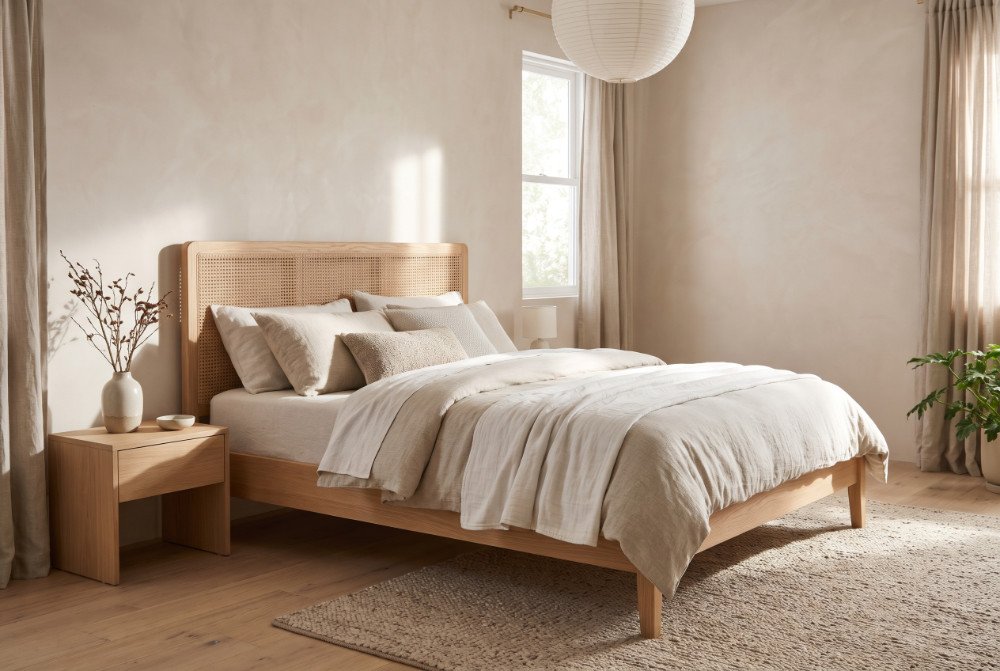
DataIntelo estimates that upholstered headboards accounted for 38.4% of global headboard market revenue in 2025, compared with 27.6% for wooden designs. While these figures provide excellent macroeconomic context, they do not automatically predict your store's 2027 unit sales. Instead, they prove that both categories command massive global demand, meaning neither is fading from consumer preference anytime soon.
Different headboard styles appeal to different customer groups. Rather than treating one design as the next universal best-seller, retailers should compare each style with their existing bedroom collections.
Wooden and woven headboards: natural, textured looks in Japandi, coastal, and boho-leaning bedrooms
Wooden headboards with rattan or cane inserts suit customers who prefer natural materials and relaxed bedroom interiors. Light wood tones work particularly well in Japandi and coastal collections, while more expressive woven patterns can support boho-inspired designs.
At MPP Furniture, we have developed Queen and King bed frames with woven details for a U.S. buyer. These products became best-sellers within that buyer's collection and generated repeat orders.
However, natural texture needs careful placement to avoid making a collection look too busy. For a deeper explanation, read our guide to Japandi bedroom design, which discusses balancing light wood, rattan, and visual simplicity.
The steady demand for wooden headboards is increasingly driven by consumers seeking sustainable and durable materials. By offering eco-conscious options like reclaimed or FSC-certified wood, retailers can easily position these pieces as high-margin premium products.
Upholstered headboards: soft, hotel-style comfort for customers who want a plush, quiet look
Upholstered headboards suit customers who want a softer bedroom atmosphere. Taller padded panels, curved shapes, and neutral fabrics can create a hotel-inspired appearance without heavy decoration.
Retailers serving comfort-focused customers will find strong upselling potential here. Using highly durable performance fabrics like stain-resistant or moisture-wicking materials adds a functional premium that justifies higher retail prices. This blend of plush comfort and smart materials attracts both residential and commercial buyers.
However, more fabric options mean more decisions about shade consistency, cleaning, and stock availability. A beautiful sample is only the beginning.
Statement wood headboards: warm solid wood in classic or heritage-leaning collections
Solid wood headboards with shaped panels, detailed profiles, or deeper finishes can appeal to customers who prefer traditional bedroom furniture. Mahogany, for example, offers a warmer direction than pale wood and can support classic collections.
These designs rely heavily on proportion, craftsmanship, and finishing consistency. Retailers should check whether the final appearance can be reproduced across larger orders.
For buyers considering custom wooden designs, our article on developing solid mahogany headboards for retail bedroom collections explains how design references become workable construction and approved samples.
Cost, Shipping, and Return Risks Compared

A headboard's purchase price is only one part of its real cost. Retailers also need to consider packing, container space, handling, showroom care, and potential returns.
Upholstered headboards require fabric, foam, cutting, and sewing. Fabric availability and color matching can affect production schedules, while exposed upholstery needs protection against dust, moisture, and stains during shipping.
Wooden headboards have different risks, including finish variation, scratches, damaged corners, and uneven weaving. Heavy solid wood designs may also increase handling costs.
Neither type is automatically cheaper to ship, especially given volatile global container freight rates. Bulky upholstered headboards consume more cubic meters (CBM) than flat-packed wooden alternatives, directly increasing your landed costs. To protect your margins, strictly compare actual packed dimensions, gross weight, and freight cost per unit for equivalent headboard sizes before placing high-volume orders.
For woven designs, material choice can influence weight, appearance, and production cost. Our article about rattan and Sungkai wood furniture explains how these materials work together in bedroom products.
At MPP Furniture, we remind buyers that standalone headboards offer flexible manufacturing costs based on room placement. A freestanding design requires double-sided weaving, while a wall-mounted version only needs a single woven layer to save costs. For wall-mounted options, always plan for reliable hardware and account for varying mattress heights.
A damaged headboard can quickly reduce the profit from an otherwise successful sale. This is why packaging, mounting details, and product consistency deserve attention before bulk orders.
At MPP Furniture, we pay particular attention to exposed headboard legs and other vulnerable areas during packing. For more manufacturing insight, read our guide to checking mahogany headboards before bulk production.
Tariff and Compliance Differences to Check
For retailers importing headboards into the United States, tariff classification should be checked before confirming landed costs. Complete wooden bedroom furniture may fall under HTS 9403.50, but separately imported headboards can be classified differently as furniture parts.
Recent updates to Section 232 mean that certain upholstered wooden products now face a steep 25% tariff, which is scheduled to jump to 30% by the start of 2026. Before finalizing your 2027 assortment, you must confirm exactly how your upholstered headboards are classified under this strict new rule. Failing to account for this massive cost bump could easily wipe out your margins before the furniture even reaches your warehouse.
Upholstered products may also face state labeling requirements. California, for example, includes covered upholstered headboards within its furniture labeling rules.
Before ordering, ask your customs broker and compliance team to review the product construction, shipping configuration, destination, and current requirements. A small classification mistake can become an expensive surprise.
How to Split Your Headboard Mix
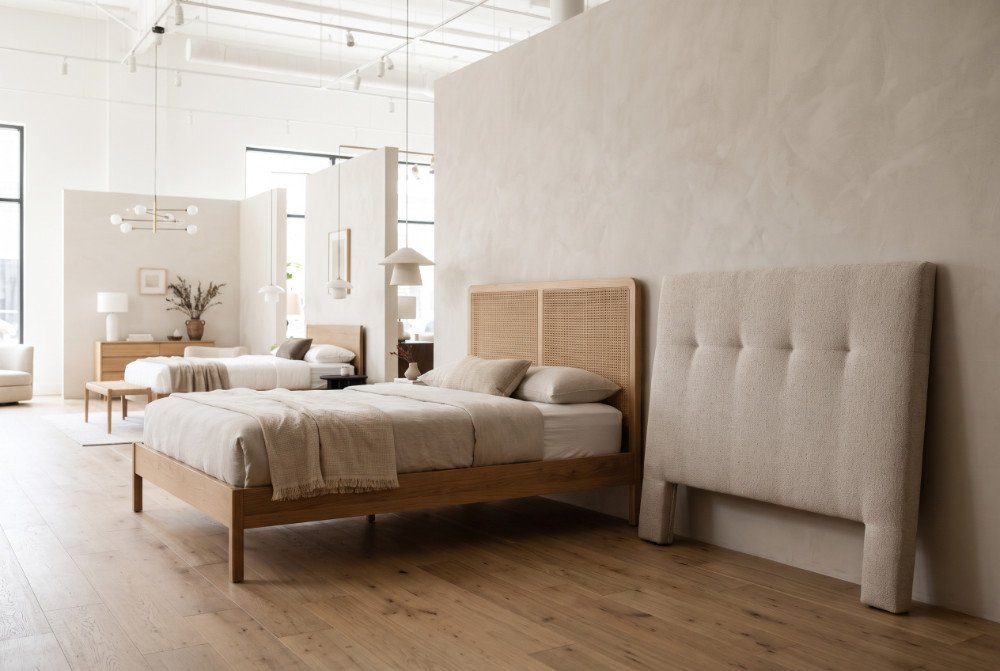
The better question for 2027 may not be which headboard sells more, but how many designs of each type your customers are likely to buy. A balanced range can offer choice without filling your warehouse with unnecessary stock, proving that a calculated product mix is much safer than betting your entire inventory on a single material.
Anchor the range on the style your customers already buy
Start by reviewing your existing bedroom sales. Compare unit sales, gross margin, returns, and stock turnover across natural wood, upholstered, and mixed-material products.
If wooden bedroom collections already perform well, they may deserve the larger share of your opening range. The same logic applies when upholstered products have stronger results.
Add one or two designs of the other type as a test
Instead of launching too many unfamiliar designs, introduce one or two headboards that complement your current assortment. Test customer interest before committing to larger quantities.
For example, a retailer selling mainly wooden bedroom furniture could test one upholstered design and one wood-and-rattan alternative. This creates variety without completely changing the collection.
Use a shared bed frame structure with interchangeable headboards to keep SKUs manageable
A shared bed frame structure can help retailers offer different headboard appearances without developing a completely separate bed for every style. However, mounting positions, dimensions, support requirements, and compatibility must be checked during development.
At MPP Furniture, we support custom and OEM bedroom furniture development through in-house manufacturing, skilled handcraftsmanship, machinery, and production-stage quality checks. Retailers considering shared-frame collections can discuss their designs through our Indonesian custom furniture manufacturer services.
Working with an experienced Indonesian furniture supplier can also help buyers compare material options, construction, and packing before committing to their assortment.
Final Thoughts: Key Takeaways Before You Plan Your 2027 Headboard Range
Wooden and upholstered headboards meet different customer expectations, so neither is guaranteed to outsell the other in 2027. The better assortment is the one that matches your customers while controlling landed costs, handling risks, and managing inventory.
Start with proven styles, test a few alternatives, and review compliance before placing larger orders. A shared bed frame with interchangeable headboards may also help keep the range manageable when the construction supports it.
If you are planning a new bedroom collection, MPP Furniture offers free consultation and product development support to help turn your headboard ideas into production-ready designs.
Frequently Asked Questions: Retail Headboard Trends in 2027
1. Which headboard type is more cost-effective to ship?
Wooden headboards are usually more container-efficient because they can be flat-packed, whereas bulky upholstered designs consume more CBM and increase shipping costs.
2. Are there new import tariffs for upholstered headboards?
Yes, under recent Section 232 updates, certain upholstered wooden products face a 25% tariff, which is scheduled to rise to 30% by 2026.
3. How can I offer multiple headboard styles without overstocking?
Utilize a shared bed frame structure with interchangeable wooden and upholstered headboards to test customer interest while keeping your total SKUs manageable.
4. Which headboard style generates the most market revenue?
Data estimates show upholstered headboards accounted for 38.4% of global market revenue in 2025, though sustainable wooden headboards remain a strong premium option holding a 27.6% share.
Ready to Plan Your 2027 Headboard Range?
If you are planning a new bedroom collection, MPP Furniture offers free consultation and product development support to help turn your headboard ideas into production-ready designs.

I am a Web Designer, Technical SEO Specialist, and writer with 6+ years of experience in website optimization and search visibility. For more than a year, I have supported MPP Furniture’s growth, and I am currently expanding my role as an author to help B2B furniture buyers make more informed business decisions through informative, practical, and impactful articles.
0 Comments