Many furniture buyers have experienced the same frustrating situation. The sample looks excellent, communication feels smooth, and the supplier appears professional at the beginning. But once mass production starts, problems slowly appear.
You are not alone if you have dealt with inconsistent finishing, delayed shipments, or products that do not match the approved sample. These problems happen more often than many buyers expect, especially in global furniture sourcing.
This article reveals the root causes of furniture quality issues behind the scenes. You will learn how production systems affect consistency, what warning signs buyers should watch for, and why choosing the right manufacturer matters for long-term business growth.
Why Many Furniture Suppliers Perform Well at the Beginning
The beginning of a supplier relationship is usually the strongest stage. Suppliers know buyers are evaluating them carefully, so they put extra effort into samples, communication, and presentation. In many cases, the first order becomes a “trust-building phase.”
Sample production is also very different from mass production. A supplier may use senior craftsmen, better wood selection, or slower production methods to create a perfect prototype. Because the quantity is small, quality control is easier to manage.
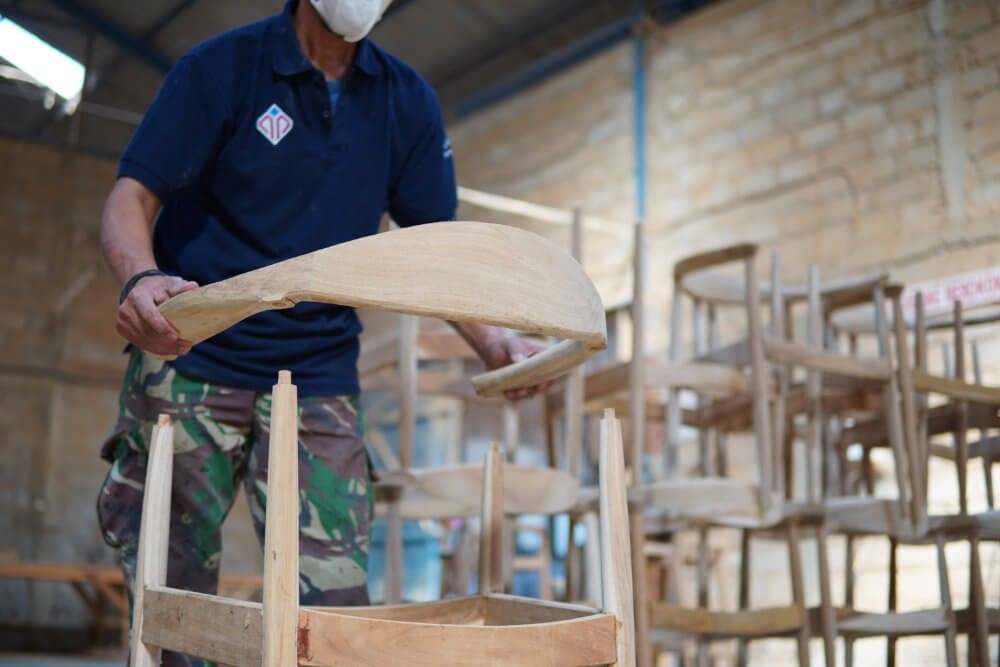
The problem starts when production scales up. Once orders increase from one sample to hundreds of units, the supplier must manage workers, materials, lead times, and workflow consistency at the same time. This is where weak systems begin to show.
Many buyers mistake a good sample for proof of long-term production capability. To avoid this costly trap, learning how to choose the best Indonesian furniture manufacturers for export will help you evaluate their actual manufacturing systems rather than just their initial presentation.
The Most Common Furniture Supplier Quality Issues in Production
1. Inconsistent Material Selection
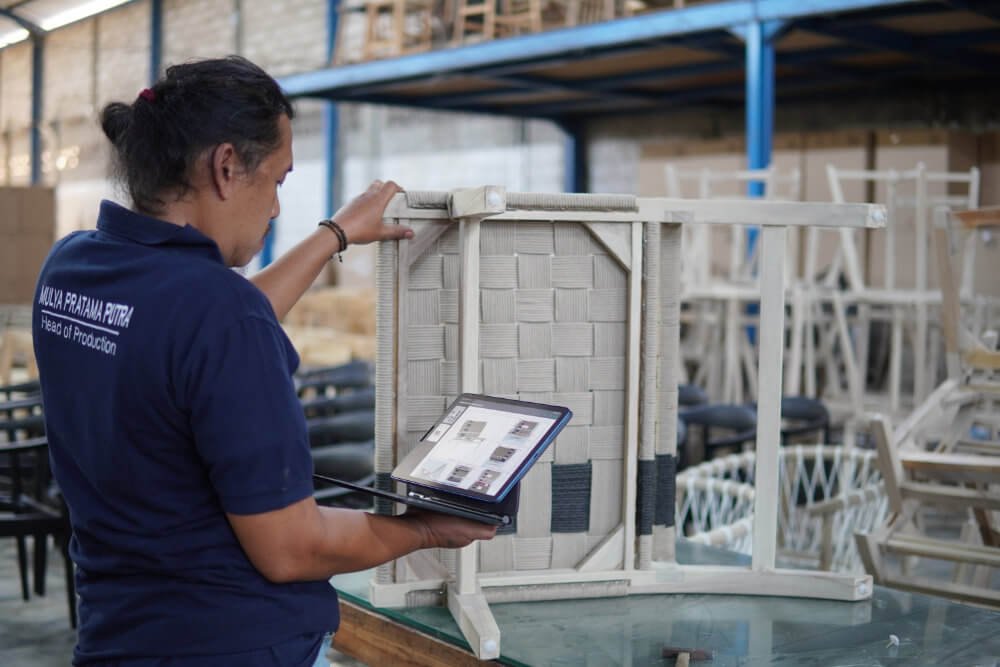
Material inconsistency is one of the most common production problems in furniture manufacturing. Some suppliers use different wood grades between batches because they lack proper material control systems. This creates variation in color, durability, and product stability.
Wood moisture content is another major issue. If the wood is not dried correctly, furniture can crack, warp, or loosen after shipment. In export furniture production, moisture content below 12 percent is generally considered safer for stability.
Often, suppliers prioritize production speed over raw material preparation. This creates hidden problems that may only appear after the furniture reaches the buyer’s warehouse or customer.
2. Finishing Inconsistency Across Batches
Finishing consistency becomes harder when production volume increases. A supplier may achieve a beautiful finish on one sample but struggle to repeat the same result across large quantities.
Different workers often apply stain and coating differently. Even small variations in sanding pressure, spray distance, or drying time can change the final appearance. As a result, buyers receive products with uneven color or texture.
Outsourcing finishing work to external workshops exacerbates this issue. Without standardized finishing procedures, consistency becomes difficult to maintain across multiple batches.
3. Joinery and Structural Weakness
Visually appealing furniture may still hide structural flaws. Weak joints, inaccurate drilling, or poor assembly methods can reduce durability during daily use.
Strong furniture construction depends on machining precision and stable production systems. Joinery methods like mortise and tenon require accurate cutting and fitting to maintain long-term strength. Small production shortcuts can weaken the entire structure.
In our experience, structural problems often appear after suppliers rush production to meet deadlines. When production pressure increases, quality discipline usually becomes the first thing affected.
At MPP Furniture, we prioritize precision joinery to prevent these structural failures. Exploring our Indonesian furniture collections will give you a clear picture of how standardized in-house machining maintains long-term strength across all designs.
4. Poor Quality Control During Mass Production
Some suppliers only check quality at the final stage before shipment. This creates a reactive system instead of a preventive one. By the time defects are discovered, fixing them becomes slower and more expensive.
Reliable manufacturers apply quality control throughout production. This includes material inspection, assembly checks, finishing review, and packaging evaluation before shipment.
Factories with structured quality systems usually document each production stage carefully. This allows problems to be identified earlier, so consistency becomes easier to maintain over time.
Why Quality Becomes Inconsistent Over Time
Many suppliers can handle small orders successfully. The challenge starts when production volume grows faster than the supplier’s internal systems. Scaling without proper process control creates instability, which is exactly why custom wood furniture quality drops after the first batch.
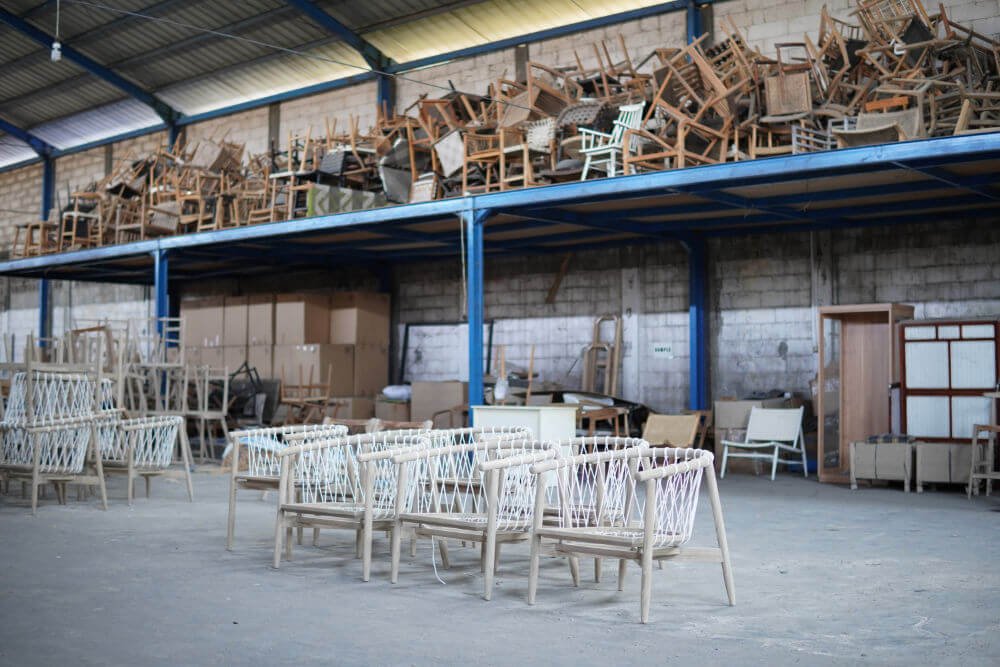
Some factories respond to growing demand by adding temporary workers or outsourcing overflow orders. While this may increase production capacity, it also increases variation in workmanship and finishing quality.
Overcapacity is another common issue. A supplier may accept too many orders at the same time because they want to maximize sales. But once production becomes overloaded, delays and quality problems usually follow.
A reliable furniture manufacturer needs more than skilled craftsmen. They also need production planning, standardized procedures, and quality systems that can support repeat orders consistently.
This is one reason why manufacturers with full in-house production often maintain better consistency over time. They have stronger control over materials, workflow, and production coordination.
Early Warning Signs of Furniture Supplier Quality Issues
Small inconsistencies between orders are often early warning signs. Buyers sometimes ignore minor differences at the beginning because the issues seem manageable. However, these minor issues often escalate as production scales.
Longer lead times without a clear explanation can also signal operational problems. Some suppliers continue accepting orders even when production capacity is already overloaded.
Another warning sign is unclear communication about materials or production details. Reliable manufacturers can explain their process directly because they understand their systems well, while vague answers often indicate weak production control.
Buyers should also pay attention to transparency. If a supplier avoids factory walkthroughs, refuses production updates, or limits visibility during manufacturing, that should raise immediate concerns. This lack of transparency is exactly why a visit to your Indonesian furniture supplier is important before committing to mass production.
Why “Good Samples” Are Not Enough to Evaluate a Supplier
A sample test demonstrates craftsmanship, but mass-production tests systems. Producing a single perfect prototype relies on a completely different production system than scaling up to hundreds of units.
Unfortunately, many buyers focus heavily on the sample's appearance and completely overlook scalability indicators. They often forget to evaluate the supplier's production flow, machinery setup, worker allocation, and material preparation.
Consequently, hidden production limits typically surface only after mass production begins. This is why experienced buyers always evaluate the manufacturing system behind the product to ensure long-term consistency.
Why Choosing the Right Indonesian Furniture Manufacturer Matters
While Indonesia offers an incredible production ecosystem, partnering with experienced Indonesian furniture manufacturers is crucial to ensure consistent export quality and scalable production. Manufacturers who regularly ship to global markets already understand international buyer expectations.
Another critical factor is proper documentation handling for international trade. Experienced suppliers seamlessly manage the necessary paperwork to prevent costly delays during shipping and customs clearance.
Reliable manufacturers implement structured quality control by keeping their production fully in-house. This centralized system allows for faster adjustments, better workflow coordination, and highly stable output across repeat orders.

Finally, strong logistics coordination is essential for ensuring your furniture arrives safely. A capable manufacturer understands international packaging standards and production scheduling to reduce friction during long-term cooperation.
At MPP Furniture, our 1.6-hectare facility and 200+ skilled artisans ensure strict quality control at scale. This in-house system reliably produces up to 30 containers monthly without compromising detail. We warmly welcome you to visit our factory and inspect our manufacturing capabilities firsthand.
Final Thoughts: Understanding Furniture Supplier Quality Issues Is the First Step to Better Sourcing Decisions
Furniture supplier quality issues are rarely random problems. In most cases, they come from weak systems, inconsistent production control, or scaling beyond operational capacity.
A beautiful sample does not automatically mean a supplier can maintain the same quality level during mass production. Buyers need to evaluate the production system behind the sample, not only the product itself.
The strongest sourcing relationships are usually built on transparency, structured manufacturing, and long-term consistency. This is why experienced buyers focus heavily on factory systems, communication quality, and production visibility before scaling orders. Despite the challenges mentioned above, Indonesian furniture is worth sourcing when you find the right manufacturing partner. A reliable factory will reduce defects, improve delivery consistency, and strengthen your business reputation in the long run.
Planning Bulk Furniture Orders from Indonesia?
Talk to our team to discuss factory verification, quality control systems, and mass production capabilities before committing to your large orders.
FAQs: Furniture Manufacturing & Supplier Verification
1. Why do furniture samples differ from mass production?
Samples are usually produced under controlled conditions with more attention and lower production pressure. Mass production introduces scaling challenges such as worker coordination, material consistency, and lead time management.
2. What causes furniture quality inconsistency?
Common causes include inconsistent material selection, weak finishing control, outsourced production, and lack of structured quality control systems.
3. How can buyers verify a furniture supplier?
Buyers should review factory systems, request production updates, evaluate quality checkpoints, and conduct physical or virtual factory visits whenever possible.
4. Why is in-house production important in furniture manufacturing?
In-house production gives manufacturers stronger control over materials, workflow, and quality standards. This usually results in better consistency across repeat orders.
5. What should buyers check before placing bulk furniture orders?
Buyers should evaluate production systems, quality control procedures, material preparation, export experience, communication quality, and scalability capability before committing to large orders.

I am a Web Designer, Technical SEO Specialist, and writer with 6+ years of experience in website optimization and search visibility. For more than a year, I have supported MPP Furniture’s growth, and I am currently expanding my role as an author to help B2B furniture buyers make more informed business decisions through informative, practical, and impactful articles.



0 Comments