Retail buyers already know that wood and leather can look good together. The harder question is whether that combination gives a counter stool enough character to earn a place in a retail collection, especially when the product must sit beside other indoor furniture.
This article explains why Sungkai wood and leather can work as one design direction rather than simply two materials used on the same product. From the perspective of an Indonesian furniture supplier, we will also look at what retailers should review before deciding whether this material combination fits their collection.
We will look at the contrast between wood and leather, how leather affects premium perception, why counter stools suit this pairing, and what should be reviewed before production. The goal is simple: help you decide whether this material combination fits your collection before moving into sampling or quotation.
Why Sungkai Wood and Leather Work Well Together
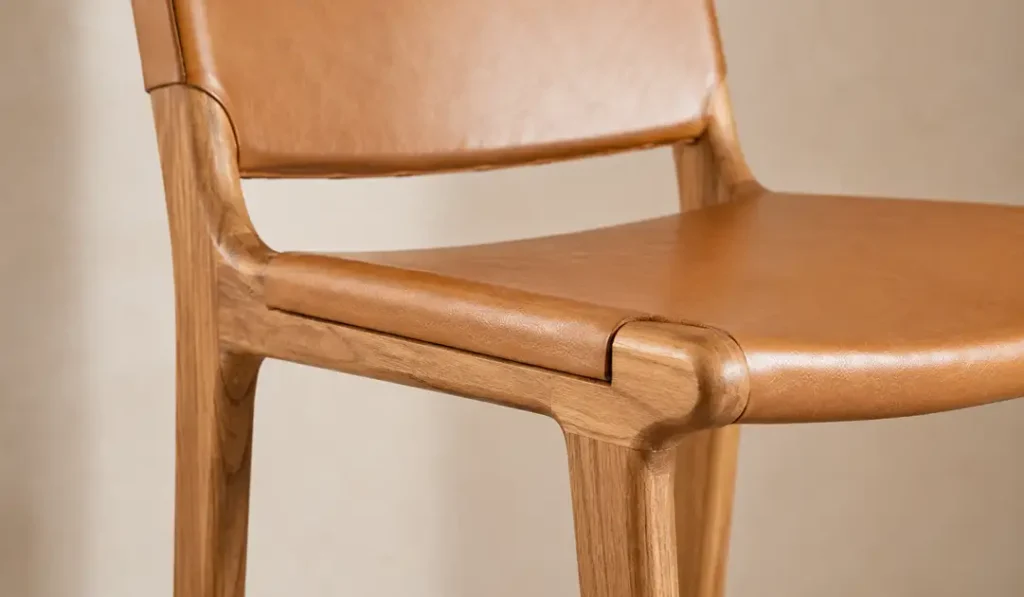
Sungkai gives a counter stool a light, natural base with visible wood grain, while leather introduces a different texture and a stronger visual contrast. In MPP Furniture's current production, this combination is used not only for counter stools, but also for dining chairs and occasional chairs, with repeat orders continuing since 2024.
From our experience, buyers usually choose the combination based on the style direction of the collection rather than the materials alone. The relationship between the wood finish and leather color often shapes how warm, light, refined, or relaxed the final product feels.
How Leather Can Raise the Premium Perception of a Sungkai Counter Stool
Leather can make a Sungkai counter stool appear more refined because it adds texture, color contrast, and another level of detail. But leather does not automatically make furniture look premium; poor placement, weak workmanship, or a leather tone that fights with the wood finish can have the opposite effect.
Brown or cognac leather creates a warmer contrast against light Sungkai, which can work well for collections that want a natural but richer direction. A white or pale leather seat creates a cleaner result, which may suit lighter Scandinavian or contemporary indoor furniture.
This is why a leather counter stool should be evaluated as one product rather than as a wooden frame plus an expensive seat material. The wood finish, leather color, texture, and visible proportion need to support the same design idea.
Why Counter Stools Are a Good Format for This Material Combination
A counter stool is relatively compact, so the relationship between materials is easy to see. Buyers can quickly notice the seat, legs, footrest, side profile, wood grain, and leather treatment without large surfaces distracting from those details.
This makes mixed-material counter stools useful as accent pieces within a wider collection. A woven leather seat, for example, can add texture while still leaving enough of the Sungkai frame visible to maintain the natural wood character.
The same simplicity can expose production weaknesses. When several stools are displayed together, uneven leather spacing, different leg angles, inconsistent sanding, or small finish differences can become much easier to notice.
Where Sungkai and Leather Counter Stools Fit in an Indoor Retail Collection
Sungkai and leather counter stools can work well in collections that already use light woods, natural textures, and relaxed indoor materials. They can sit beside dining tables, consoles, cabinets, or occasional pieces while adding a different surface treatment to the assortment.
They can also act as a bridge between solid-wood furniture and upholstered seating. For retailers building a wider range, this gives customers another visual entry point without changing the whole material direction of the collection.
This works best when the stool has a clear role in the range, especially for retailers planning indoor furniture that can sell throughout the year. A mixed-material stool should add a different texture, function, or visual contrast to the assortment rather than becoming another similar SKU.
What Retailers Should Evaluate Before Choosing Sungkai and Leather
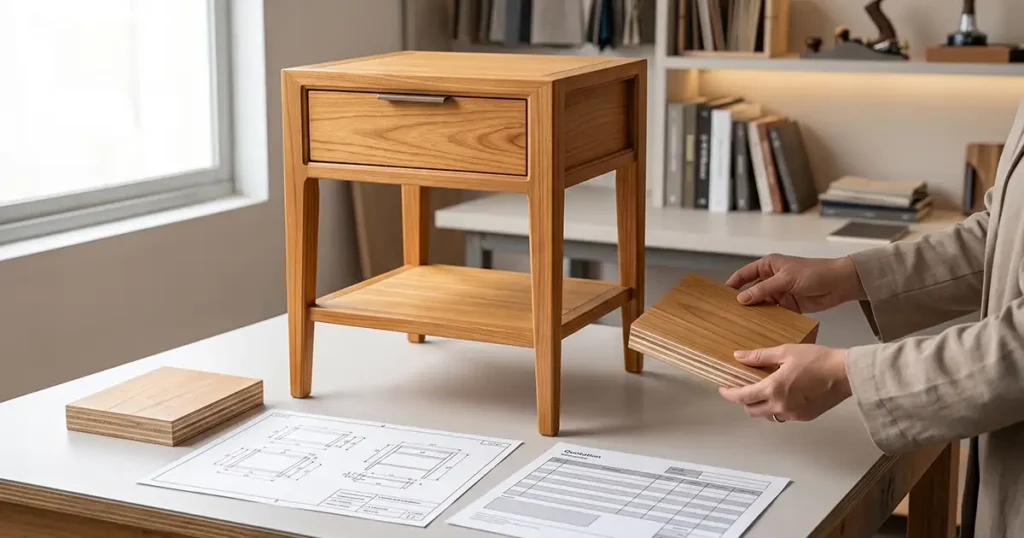
Before approving bulk production, buyers should look beyond color references and check how the design is translated into production details. At MPP Furniture, the process normally starts with a drawing that confirms dimensions, wood thickness, and other product details before the material swatches are prepared.
After that, MPP prepares the wood finish and leather swatches based on the buyer's reference. Approval can first be done through photos, but physical swatches can also be sent when the buyer needs to review the materials directly.
Once the finish and leather direction are approved, a product sample is made and used as the master reference for bulk production. This gives both buyer and manufacturer one physical standard to follow during production.
Wood Finish and Leather Color Should Work as One Direction
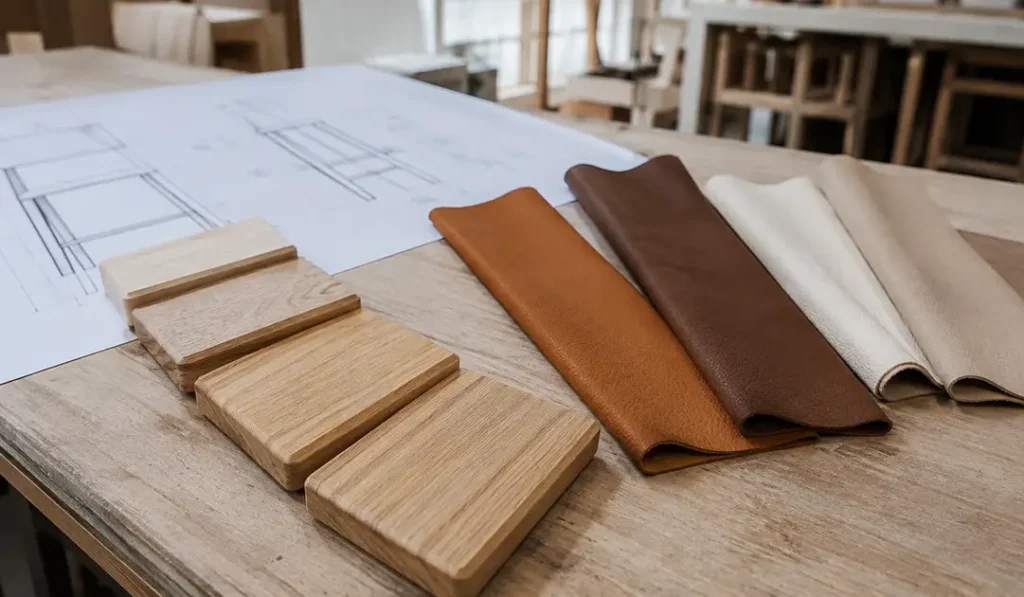
Do not approve the wood finish and leather color as two separate decisions. At MPP Furniture, we normally ask buyers to review both swatches together so the finish and leather still follow the same collection direction.
Wood finish and leather color are often the two details buyers pay the most attention to during approval. This is also why retailers should review how Sungkai finishing for light indoor retail collections is controlled before bulk production, because the final combination needs to work as one visual direction.
If photos or videos are not enough for approval, MPP can send the physical swatches so the buyer can review them directly. This reduces the risk of approving two materials that look good separately but do not feel right when placed together.
Leather Placement Should Support the Stool Design
Leather can appear as a full upholstered seat, woven straps, or another controlled detail depending on the product. The better choice is the one that supports the silhouette and still allows the wooden structure to contribute to the design.
More leather is not always better. On a slim Sungkai frame, a lighter leather treatment may keep the stool visually balanced, while a larger upholstered area can move the design toward a softer and more substantial look.
Construction Still Determines Whether the Product Feels Premium
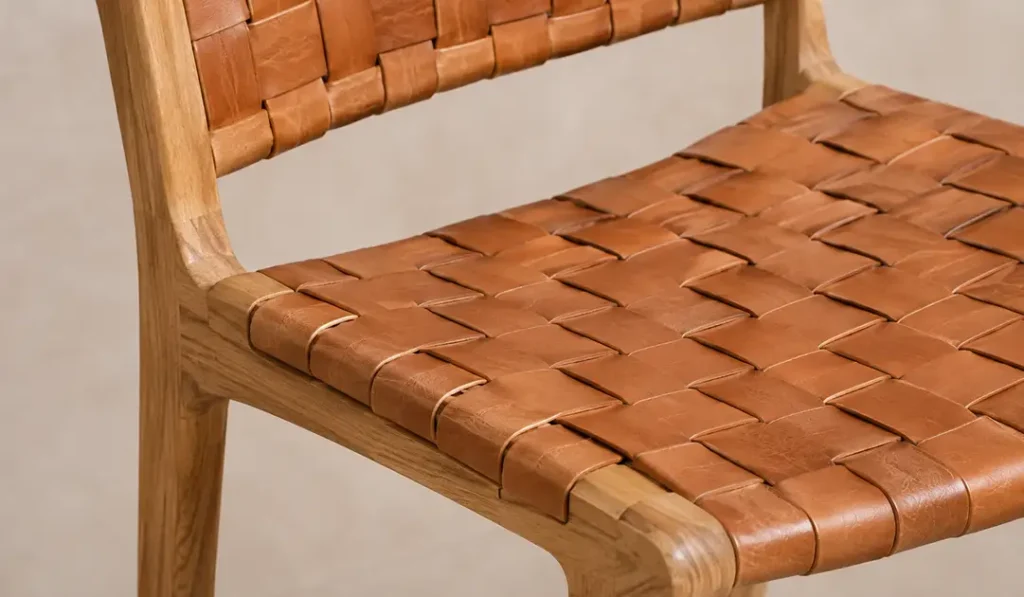
Premium perception comes from material choice and production accuracy together. Good leather cannot hide an uneven frame, inconsistent joints, rough sanding, irregular weaving, or different finish tones across a bulk order.
This matters even more when several counter stools are placed side by side in a showroom, restaurant project, or retail display. Buyers should review both the appearance of one approved sample and the manufacturer's method for repeating that result across production.
Why Develop Sungkai Wood and Leather Counter Stools with MPP Furniture
MPP Furniture currently produces Sungkai and leather seating across several categories, including counter stools, dining chairs, and occasional chairs. Some of these programs have received repeat orders since 2024, so the material combination is already part of active production rather than only sample development.
Interestingly, repeat buyers do not always change the wooden frame. In some programs, the frame remains the same while buyers change the finish color, leather color, leather texture, or weaving pattern to create a different collection direction.
This gives retailers room to refresh a product without redesigning the entire structure. Buyers can also review MPP's bar and counter stool collection as a starting reference before discussing dimensions, finish, leather direction, or new product development.
Conclusion: Sungkai Wood and Leather Should Work as One Product Direction
Sungkai wood and leather can give a counter stool more visual character than an all-wood design, but the value comes from how the materials work together. Wood finish, leather color, texture, placement, and construction should support the same collection direction.
For retailers, the decision should go beyond whether a leather counter stool looks attractive as a single sample. The stronger question is whether the Sungkai and leather combination fits the wider indoor collection and can maintain the same appearance across repeat production.
A well-developed wood and leather counter stool should feel intentional from every angle. When the material pairing and production details are aligned, the product has a clearer reason to earn a place in a retail collection.
Develop Your Sungkai Wood and Leather Counter Stool Collection with MPP Furniture
A Sungkai and leather counter stool works best when every choice follows the same retail direction, from wood tone and leather placement to final construction.
Share your product reference, dimensions, preferred finish, or leather direction with MPP Furniture to discuss custom development and quotation for your next indoor seating program.
FAQ: About Sungkai Wood and Leather Counter Stools
1. Is Sungkai wood suitable for counter stools?
Yes. Sungkai wood can be used for indoor counter stools when the material is properly prepared and the frame, joints, dimensions, sanding, and finish are produced to the approved design.
2. What leather color works well with Sungkai wood?
Cognac and brown leather create a warmer contrast with light Sungkai, while white or lighter leather creates a cleaner visual direction. The right choice depends on the wider collection rather than the stool alone.
3. Does leather make a Sungkai counter stool look more premium?
Leather can raise perceived value when its color, texture, placement, and workmanship fit the wooden frame. Adding leather without a clear design direction does not automatically make the product look more expensive.
4. What should retailers approve before bulk production?
Retailers should review the wood finish, leather sample, dimensions, material placement, construction details, and complete product sample. Approving the material combination together gives both buyer and manufacturer a clearer reference for bulk production.
5. Why should wood finish and leather swatches be approved together?
Wood finish and leather color can look good separately but feel mismatched when combined on the same product. At MPP Furniture, both swatches are normally reviewed together so the final pairing follows the same collection direction before the product sample is made.

A versatile content creator with a strong foundation in product photography and videography, and a comprehensive brand strategy. Capable of creating engaging content to connect consumers and producers, web analytics, and engaging visual content to drive interest and growth for a product or brand.
0 Comments