Photos can make a living room sample look production-ready, but they rarely show real comfort, scale, or display balance. A sofa may look attractive on screen, while the seat feels too deep, the coffee table sits too high, or the cushion loses shape after use.
That is why checking living room furniture dimensions before production matters. For retailers, importers, and furniture brand owners, proportion review is not about styling a room. It is about reducing approval risk before bulk orders, especially when working with an Indonesian Furniture Manufacturer that supports product development, sample review, and production consistency.
From MPP Furniture’s production point of view, proportion checking should happen before the sample is approved, not after the container arrives. This review also helps during custom product development, especially when buyers request a living room set that needs to look balanced across the sofa, lounge chair, coffee table, and side table.
Why Living Room Furniture Dimensions Matter Before Production
Good proportion affects comfort, display balance, production readiness, and customer satisfaction. In retail, customers do not judge a sofa, lounge chair, coffee table, or side table as separate products. They see the full living room furniture collection.
This matters even more for custom living room furniture. A small change in seat height, cushion thickness, or frame volume can affect comfort, packaging, production cost, and repeat orders. A good sample should answer one question: is this product ready to be repeated in bulk with the same comfort, proportion, and finishing quality?
Start with the Sofa as the Main Scale Reference
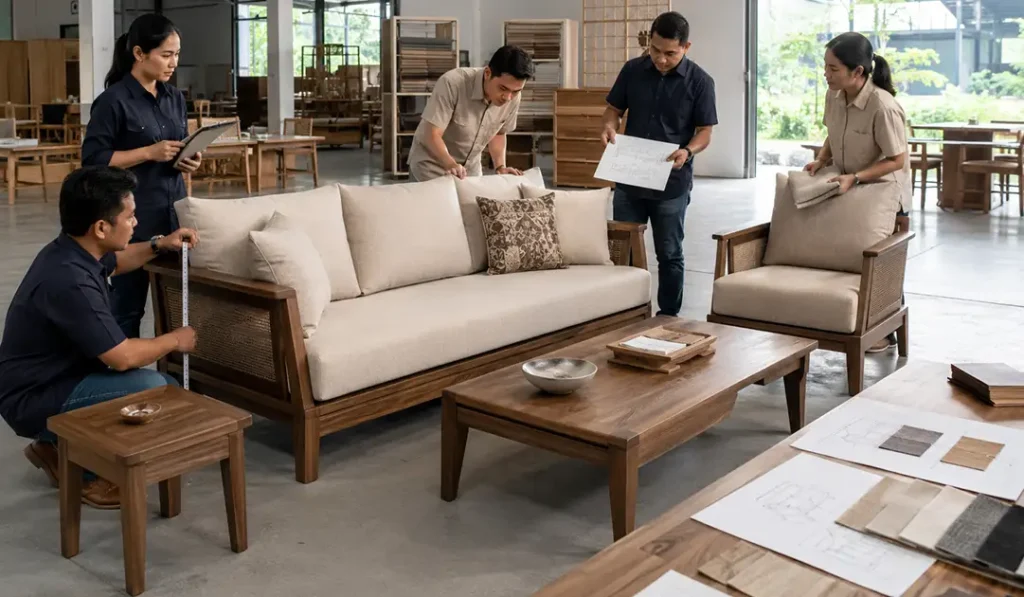
In a living room set, the sofa should be reviewed first because it becomes the main scale reference for the whole collection. From MPP Furniture’s production experience, buyers usually see the sofa before any other item because it sits in the center, has the largest volume, and works as the main seating product.
This is why sofa proportion affects more than the sofa itself. Once the sofa size is approved, the lounge chair, coffee table, side table, cushion size, and even material thickness need to follow the same balance.
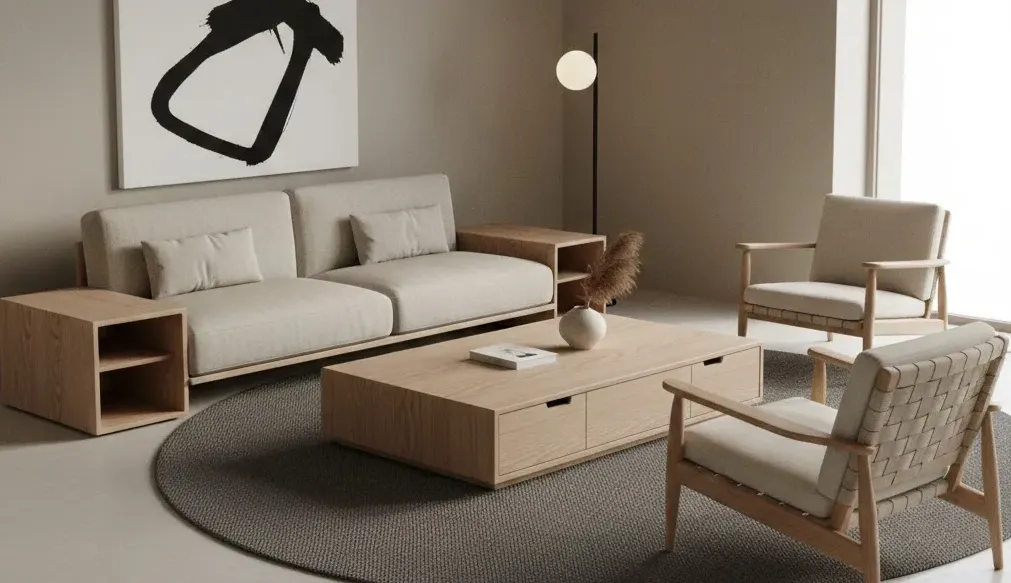
Check Seat Height, Depth, and Overall Scale
Seat height and seat depth are two of the first sofa dimensions MPP reviews because both directly affect comfort. If the seat is too low, the user’s legs may feel unsupported. If seat depth and back angle do not work well together, the backrest may feel stiff or too hard to lean on.
In June 2026, MPP worked with a buyer from France who sent photo references and dimensions based on general online recommendations. After the sample was made, the sofa looked close to the reference image, but the sitting experience felt less balanced. MPP recommended revising the seat height, seat depth, and back support before sample approval.
This is why sofa sample approval should not depend on photos or dimension tables only. The sample needs real sitting tests before bulk production begins.
Review Arm Height, Back Height, and Visual Weight
Arm height, back height, and cushion volume also affect the final look of the living room set. A sofa can have the right frame size, but the wrong cushion color, fabric choice, or cushion volume can change the full mood of the collection.
For MPP, sitting tests are part of the sample review process. The sofa is tested more than once and by different people with different body types, including taller and heavier testers. This helps the team see how the sofa works in real use, not only from one person’s opinion.
The goal is simple: the approved sofa should feel comfortable, look balanced, and become a reliable reference for the rest of the living room collection.
Check Lounge Chair Comfort Before Sample Approval

A lounge chair should not be approved from appearance alone. In a living room furniture collection, it should feel connected to the sofa while still offering its own comfort.
At MPP Furniture, lounge chair samples are checked through real sitting tests, not only drawings or product photos. The team reviews seat depth, back angle, arm height, and cushion thickness to see whether the chair feels natural in use.
A chair may look balanced in a catalog photo, but feel uncomfortable when tested. If the seat is too deep, the back angle too upright, or the arm support too low or too high, the sitting position can feel awkward.
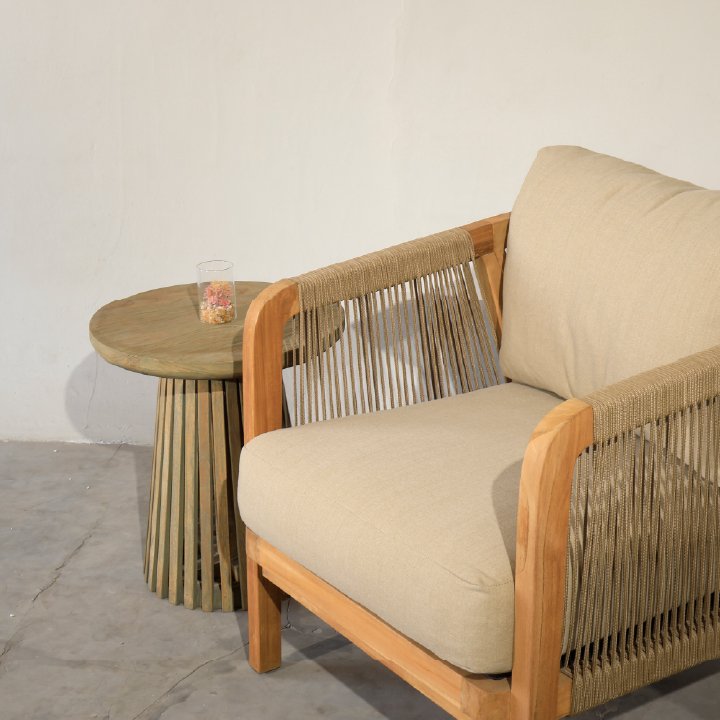
Seat Depth, Back Angle, and Arm Support
Before furniture sample approval, retailers should check whether the lounge chair supports relaxed sitting. The user should be able to lean back naturally, rest the arms comfortably, and sit without feeling pushed forward.
At MPP, this review is done with more than one tester because body types affect comfort. This is also the right stage to revise seat depth, cushion firmness, arm height, or back angle before the approved sample becomes the production reference.
Match Coffee Tables and Side Tables with Seating Proportions
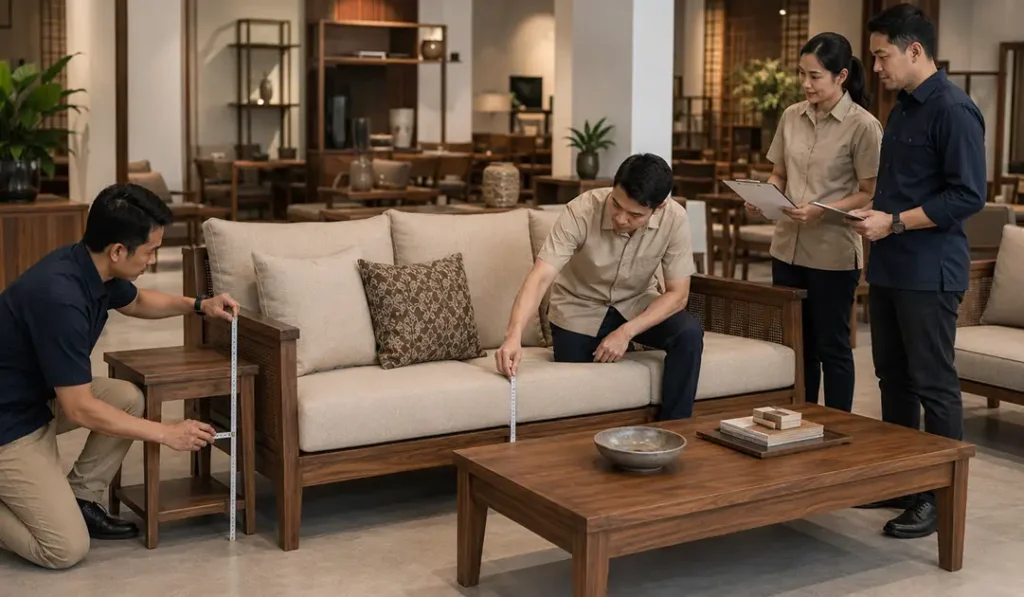
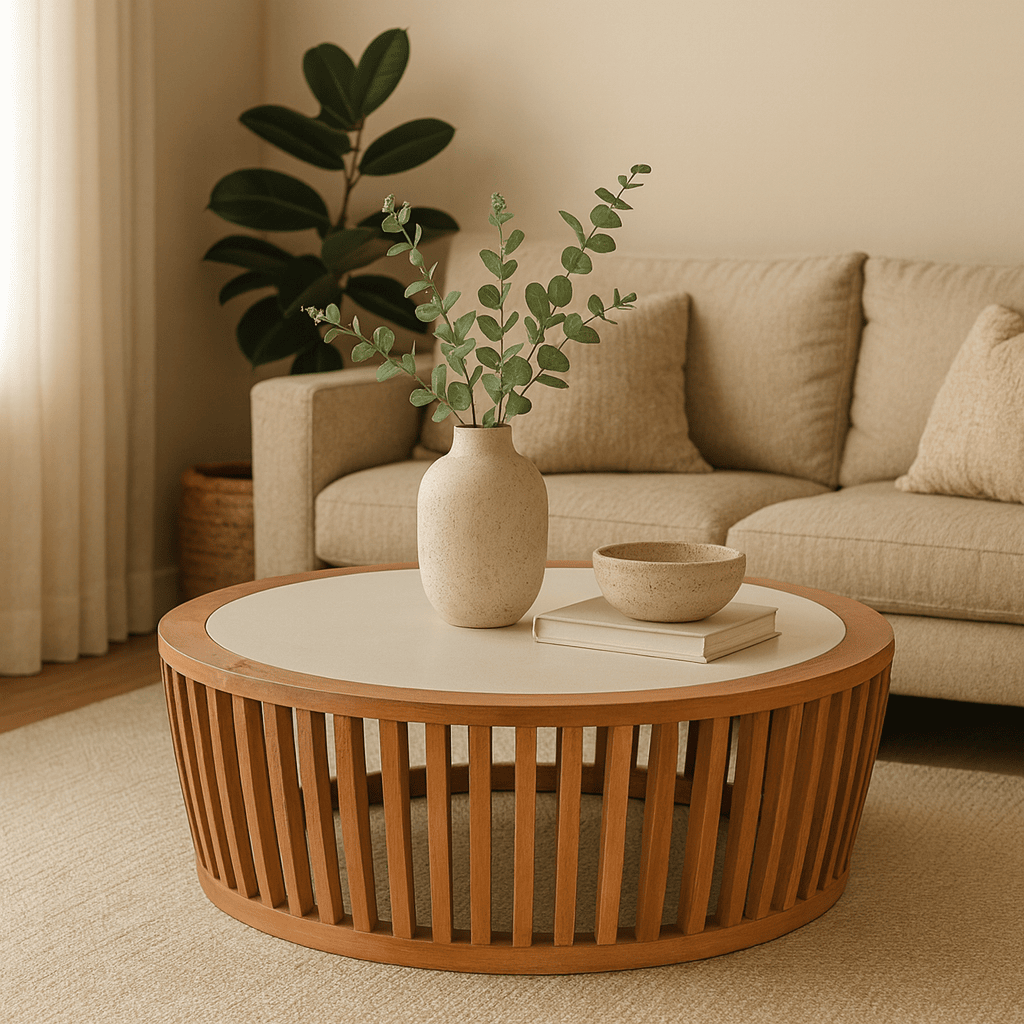
Coffee tables and side tables are often treated as add-ons, but they affect how the whole set performs in retail. Poor sofa and coffee table proportions can make a living room collection look unfinished.
Coffee Table Height vs Sofa Seat Height
A coffee table should be easy to reach from the sofa and balanced with the approved seat height. If it is too high, it can look heavy and feel awkward. If it is too low, it may look weak and less useful in display.
Retailers should also check the table base. The tabletop and base should feel visually steady, not too thin, too bulky, or disconnected from the sofa’s scale.
Side Table Height vs Sofa Arm Height
Side tables should relate to the sofa arm height or lounge chair arm height. If the side table is much lower than the arm, it may feel hard to use. If it is too high, it can interrupt the visual line of the sofa.
For retail collections, side tables should be checked as add-on products. They must be easy to place beside different seating pieces without looking forced.
Review Material Thickness and Frame Volume
Material thickness affects design, strength, cost, packaging, and production feasibility. A thick wooden frame can feel strong, but too much volume may make the product expensive, heavy, and harder to ship. A thin frame may look elegant, but the construction must still support regular use.
For rattan details, weaving scale also matters. Thick weaving can create a stronger handmade look, while fine weaving can look lighter. At MPP Furniture, products are handcrafted with precision while supported by machinery and quality control at each production stage.
Check Cushion Volume, Shape, and Sitting Comfort
Cushion volume can change the real proportion of a sofa or lounge chair. A frame may have the right size, but the wrong cushion thickness can make the seat too high, too bulky, or less comfortable after use.
At MPP Furniture, cushion review is part of sample approval because cushions often need adjustment before bulk production. Sometimes a cushion looks full in photos, but after sitting, it compresses too much and changes the real seat height. In other cases, it looks clean but feels too firm for the intended market.
Retailers should check cushion thickness together with frame height, back cushion volume, fabric fit, and firmness. Across a living room furniture collection, the sofa, lounge chair, and occasional chair should feel consistent before the sample is approved for bulk production.
Use a Furniture Sample Approval Checklist Before Bulk Production
Before bulk production, retailers should record sample approval notes in writing. This reduces confusion and helps the manufacturer repeat the approved version.
| Sample Area | What Retailers Should Check |
|---|---|
| Sofa | Seat height, seat depth, width, arm height, back height, frame volume |
| Lounge chair | Sitting comfort, back angle, arm support, cushion feel, overall scale |
| Coffee table | Height vs sofa seat, tabletop size, base proportion, visual weight |
| Side table | Height vs sofa or chair arm, width, stability, display flexibility |
| Frame | Material thickness, joinery, finishing, construction strength |
| Cushion | Thickness, compression, shape, fabric fit, back cushion volume |
| Collection | Balance across sofa, chair, coffee table, and side table |
| Production notes | Approved dimensions, revision notes, finishing standard, packaging notes |
A good furniture sample approval process should not only say “approved” or “not approved.” It should explain what needs to be adjusted, such as reducing seat depth, raising coffee table height, adding cushion firmness, or revising side table height.
This is where working with an experienced custom living room furniture manufacturer helps. MPP supports free consultation, free product development, custom design, private label, OEM, in-house production, and quality control across the process.
Final Thoughts: Good Proportion Reduces Retail Risk Before Production
Good living room furniture proportions are not only about appearance. They affect comfort, showroom display, production consistency, and the chance of customer complaints after the goods arrive.
Before approving a sample, retailers should check how the sofa, lounge chair, coffee table, side table, frame thickness, and cushion volume work together. For seating products, chair design research also shows that seat height, seat depth, back support, and arm support should relate to human body fit, not visual appearance alone.
The safest time to revise dimensions is before bulk production begins. For retailers sourcing from Indonesia, working with a manufacturer that understands proportion, comfort testing, sample review, and custom product development can lead to safer production decisions and stronger retail collections.

A versatile content creator with a strong foundation in product photography and videography, and a comprehensive brand strategy. Capable of creating engaging content to connect consumers and producers, web analytics, and engaging visual content to drive interest and growth for a product or brand.
0 Comments