Retailers planning their 2027 showroom face an awkward decision. Dark wood is gaining attention again, but replacing proven light-wood collections too quickly can leave expensive floor space tied up in products customers admire but do not buy.
The harder question is not whether dark or light wood is more fashionable. It is how much of each tone deserves space in your showroom, which products should carry it, and how far you should commit before real sell-through data comes in.
For most retailers, the answer will not be all dark or all light. Darker woods have stronger momentum going into 2027, but light and mid-tone furniture still serve different customers, room sizes, styles, and price positions.
What the Dark vs Light Debate Looks Like Going Into 2027
The direction toward richer wood is real. Sherwin-Williams' 2027 wood finish forecast includes walnut-inspired hues, rich mid-tones, pale organic stains, and deep atmospheric woods, which suggests that the market is expanding beyond the pale timber look rather than moving toward one dominant color.
The resurgence of dark wood is driven by a consumer shift toward modern luxury and warm, calming sanctuaries. Shoppers now crave the character, texture, and depth of walnut, warm oak, and chocolate brown after years of pale, washed minimalism. Retailers can leverage these richer tones to merchandise collections that evoke a sophisticated, high-end boutique hotel feel.
However, this does not mean light wood is obsolete. Minwax selected Pickled Oak as its 2027 Color of the Year, proving that softer, pale organic stains are still very much part of the conversation.
This creates a useful lesson for retailers: a trend signal is not a sales forecast for your store. Your customer base, average room size, product category, price point, and existing sell-through should still decide how far you move.
MPP has already seen the darker direction developing in hospitality and design-focused interiors. For more context on how deeper timber tones are being used, read Dark Wabi Sabi: Why Luxury Hospitality Is Embracing This Style in 2026.
How Dark, Light, and Mid-Tone Wood Perform in a Showroom
Dark wood: strong presence and perceived value, but it needs good lighting and contrast to avoid looking heavy
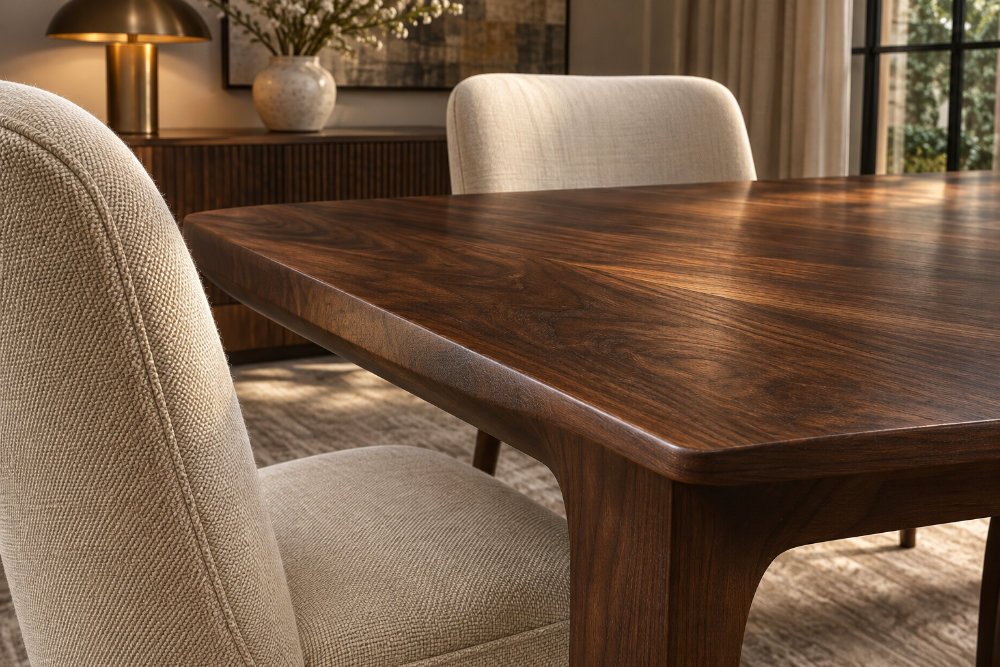
Dark furniture naturally commands attention, making it perfect for statement pieces like dining tables and sideboards. To maximize impact without overwhelming the floor, pair rich finishes with lighter upholstery, ceramic tops, or brass accents. This high-contrast approach creates a luxurious focal point while keeping your display balanced.
But dark furniture needs room to breathe. In a compact showroom with weak lighting, several large dark pieces placed together can make the display feel dense rather than premium.
For retailers considering mahogany-based collections, the material itself can provide rich reddish-brown depth before the finish is applied. For a closer look at how modern finishes affect that character, read Mastering Mahogany Interior Design with Modern Finishes and Strategic Sourcing.
Light wood: bright and easy to merchandise in small spaces, but it can feel generic if everything looks alike
Light wood remains useful because it works naturally with Japandi, Scandinavian, coastal, and warm minimalist settings. It is also easier to present in smaller room sets where buyers want furniture that feels visually lighter.
The weakness appears when every product uses nearly the same pale finish, shape, and styling. A showroom can look safe but forgettable, especially when nearby competitors carry similar natural-wood collections.
Light wood still has a clear role in bedrooms where calmness and low visual weight matter. For a closer look at this application, read Japandi Bedroom Design: Balancing Light Wood, Rattan, and Visual Simplicity.
Mid-tone wood: the flexible option that bridges both and pairs with most styles
Mid-tone wood sits between pale natural finishes and deeper walnut colors. Warm oak, medium brown, honey, and similar finishes can bring more character than very light wood without creating the visual weight of a dark collection.
This makes mid tones useful for retailers who want to respond to warmer 2027 interiors without making a sharp assortment change. They also mix easily with cream upholstery, rattan, leather, stone, and darker accent pieces.
Match the Tone to the Product and the Room
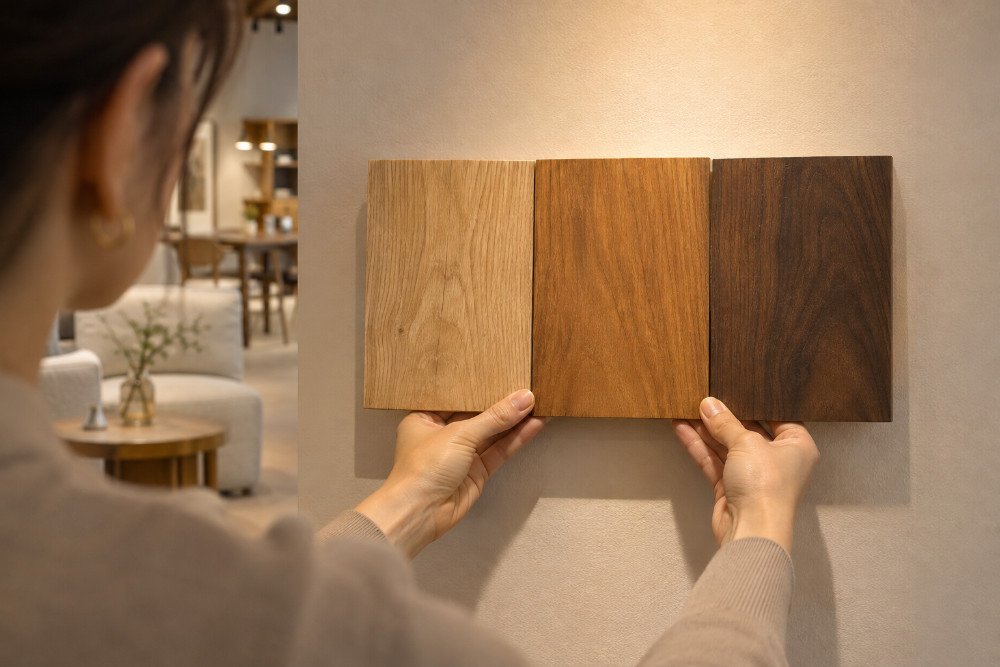
Product type should influence tone as much as the trend itself. Large dining tables, sideboards, cabinets, and consoles can carry darker finishes well because buyers often expect these pieces to act as visual anchors.
Beds, compact dining chairs, nightstands, and furniture for smaller homes often work well in light or medium finishes. Retailers can then use one or two darker pieces to create contrast instead of turning the entire collection dark.
While bedrooms often default to light finishes, adding dark wood introduces unexpected grounding and depth. This caters to buyers wanting a moody, calming space for ultimate relaxation. Simply balance these deeper pieces with soft, light styling to keep the room a tranquil retreat.
Showroom lighting and product photography must both guide your finish approval. A tone that looks rich in factory photos might read almost black in a dim store or wash out on camera. Always review physical samples under your actual showroom lighting and conduct a quick test shoot.
If you are reviewing a wider indoor assortment before deciding where each tone belongs, see MPP's indoor furniture collection for references across dining, living, and bedroom categories.
Which Woods and Finishes Deliver Each Look
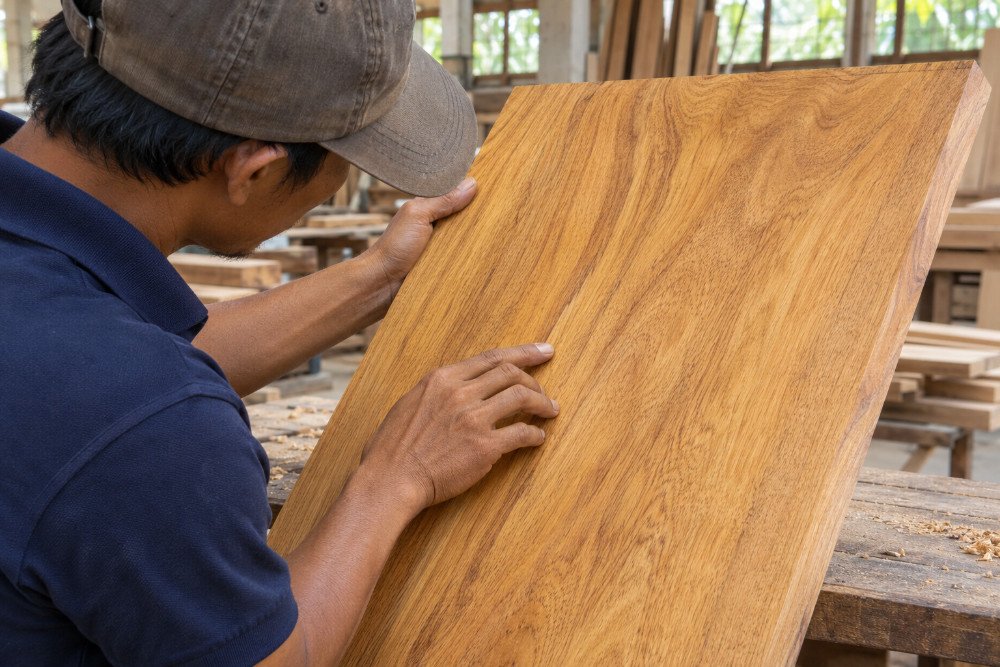
Wood tone is not determined by species alone. The final appearance comes from the base wood, grain, stain color, sanding preparation, topcoat, sheen, and lighting.
Sungkai and Mindi can support natural, light-brown, and warmer medium looks, while Mahogany and Teak can carry walnut, dark brown, and black finishes well. The same species can also move across several tone groups depending on the finishing specification.
MPP's previous Sungkai dining work shows how one material can support natural and darker finish directions within the same product family. For product examples and light-wood retail positioning, read Top 7 Sungkai Wood Dining Chairs & Tables for Modern Collections.
This is why finish approval should happen on the actual species planned for production. A walnut stain applied to Sungkai will not look identical to the same stain applied to Mahogany or teak.
A Practical Split for Your Showroom Mix
Start from what already sells in your store, then shift gradually
Begin with your own sales history rather than a trend headline. If natural finishes already sell consistently, you do not need to remove them simply because darker woods are receiving more design attention.
Instead, introduce darker or warmer finishes beside proven products and compare customer response. Your own sell-through will tell you more about the right proportion than a global trend report.
Keep a tone range per category instead of one tone across the whole collection
A retailer does not need one finish direction for every SKU. Dining may support more dark or medium wood, while bedroom collections may remain stronger in light and natural tones.
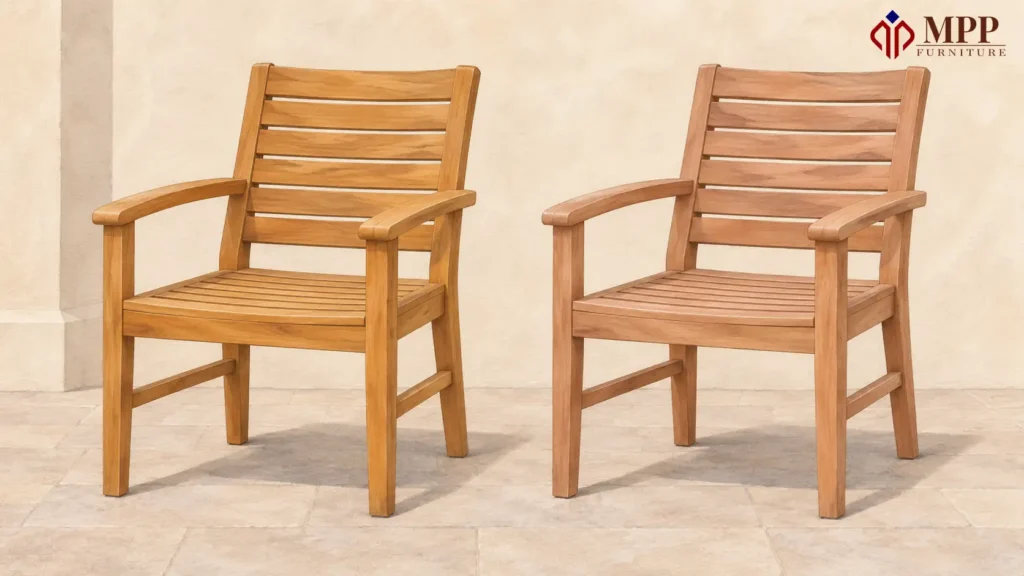
The same principle can work within one product family. A chair offered in natural and walnut finishes gives buyers a clearer choice without forcing you to develop two completely different designs.
Test the newer tone in a small lot and review sell-through before scaling
A small production test lowers the risk of committing too much stock to a new finish. Compare sell-through, customer comments, photography performance, and how often sales staff need to explain the new color.
For retailers developing their own finish direction, MPP provides product development and sampling before larger production runs. You can review those options through our Indonesian custom furniture manufacturer service before deciding whether a new tone deserves more volume.
Risks to Watch
The first risk is treating trend attention as guaranteed demand. Customers may save dark interiors on social media while still buying lighter furniture because it feels easier to place in their homes.
Dark finishes also reveal certain scratches, dust, uneven sanding, and surface differences more clearly. This puts more pressure on finishing consistency and inspection, especially across larger orders.
Light finishes have their own challenges because stains, handling marks, and color variation can appear differently on pale surfaces. Buyers should discuss finish durability, acceptable color variation, care instructions, and sample approval before production.
Working with an experienced Indonesian furniture supplier can also help when you want several tone options across wood species without losing consistency from sample to bulk production.
Final Thoughts: Key Takeaways Before You Set Your 2027 Showroom Tone Mix
Dark wood has stronger momentum going into 2027, but that does not mean light wood is finished. Light, medium, and dark tones each solve a different merchandising problem.
Use dark wood where presence and contrast add value, keep light tones where brightness and visual simplicity support the product, and use mid tones when you need a safer bridge between both directions.
Most importantly, let your own store data make the final decision. Approve finishes on the real wood, introduce newer tones in controlled quantities, then increase volume when sell-through proves the opportunity.
Frequently Asked Questions: 2027 Wood Furniture Trends
1. Is dark wood completely replacing light wood in 2027?
Not entirely. While darker tones like walnut have strong momentum for modern luxury interiors, light woods remain a staple for minimalist and Japandi styles. It is best to treat your inventory as a balanced mix rather than a strict either/or choice.
2. Should I immediately overhaul my showroom to feature dark furniture?
Shift gradually based on your own store's sales history, not just global trend headlines. Introduce darker finishes beside your proven light-wood products, and always test a small lot to review sell-through before scaling up.
3. How can I merchandise dark wood without making my showroom feel heavy?
Focus on high contrast and proper lighting. Pair dark statement pieces, such as dining tables, with light upholstery, ceramic tops, or metallic accents to create a balanced, luxurious focal point that breathes.
4. What is the safest option if I am unsure about committing to dark wood?
Mid-tone wood is your best flexible bridge. Warm oak and medium brown finishes bring richer character than pale woods, but they mix effortlessly with your existing showroom styling without adding heavy visual weight.
Ready to Set Your 2027 Showroom Tone Mix?
Explore MPP's indoor furniture collections to find the ideal balance of light, medium, and dark wood options, or visit MPP Furniture to discuss custom finishing and sample development.

I am a Web Designer, Technical SEO Specialist, and writer with 6+ years of experience in website optimization and search visibility. For more than a year, I have supported MPP Furniture’s growth, and I am currently expanding my role as an author to help B2B furniture buyers make more informed business decisions through informative, practical, and impactful articles.

0 Comments