Furniture certifications are powerful tools for screening an Indonesian supplier, especially when your business must comply with strict sourcing policies or specific customer demands. However, seeing a certification logo on a website doesn't automatically guarantee that a factory will deliver consistent, well-finished furniture.
This guide cuts through the noise to explain what truly matters for your custom furniture program. We will break down Indonesia's mandatory SVLK system, touch upon general sustainability standards, and highlight the exact documents you need. You will also discover the crucial factors to evaluate beyond certifications before approving a manufacturing partner.
Let's explore their real-world relevance for retailers, hospitality projects, and OEM buyers and arm you with the right questions to ask your potential supplier.
Why Furniture Certifications Matter When Choosing a Supplier
Certifications provide credible, third-party verification for specific parts of the supply chain. Depending on the exact system, they might validate timber legality, guarantee responsible sourcing, or fulfill your customers' strict purchasing criteria.
For international buyers, these documents are essential for eliminating the risks associated with untraceable timber. They empower retailers and commercial project managers to confidently back up the foundational claims they make to their own end-users.
But keep in mind: not all certifications do the same job. Before comparing Indonesian mahogany furniture manufacturers, you need to clearly define your market regulations and contractual requirements.
Once you've checked the compliance boxes, certifications must be weighed alongside a factory's production capabilities, quality control standards, and export experience. This holistic approach gives you a realistic picture of whether a supplier can truly support your long-term commercial program.
Understanding the Most Common Indonesian Furniture Certifications
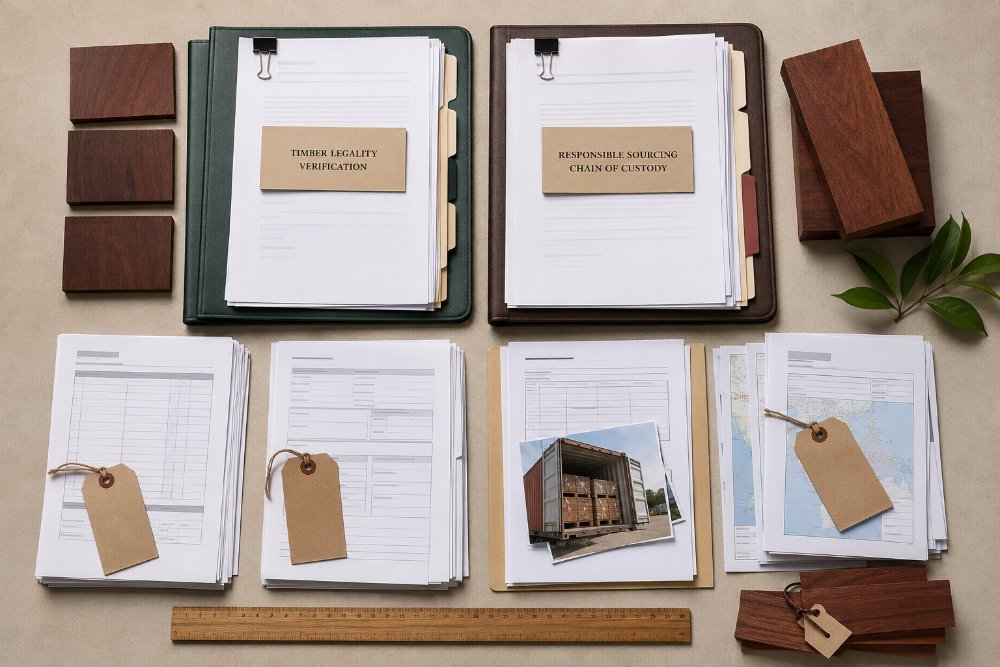
What Is SVLK?
SVLK is Indonesia's national timber legality verification system and the most critical certification for export. It acts as a rigorous checkpoint to ensure that timber origins, harvesting permits, transport, processing, and trade records fully comply with Indonesian law.
For you as a buyer, SVLK provides the absolute confidence that your wood entered the supply chain legally. In fact, Indonesia's landmark FLEGT licensing arrangement with the European Union was built entirely around this robust SVLK framework.
However, it is important to note what SVLK doesn't do: it does not certify furniture strength, moisture content, joinery precision, or finishing quality. A supplier might have flawless legality documents but still produce furniture that falls short of your technical standards.
What About Voluntary Sustainability Certifications?
Beyond mandatory legal frameworks, buyers may also encounter voluntary sustainability systems, such as the FSC (Forest Stewardship Council) Chain of Custody. These independent certifications apply to companies choosing to verify how eligible eco-friendly material is identified and tracked.
It is important to understand that voluntary certifications are often project-specific and not a universal requirement for exporting high-quality Indonesian furniture. If your project specifically demands such materials, you must explicitly confirm if a factory offers them for your desired product line.
Smart buyers always verify any sustainability claims using public certificate databases. Rather than trusting a simple logo on a supplier's homepage, check their official certificate status, scope, and approved material availability.
Are There Other Certifications Buyers May Encounter?
Yes, you might come across ISO quality management systems or specific emission, fire, and packaging standards. These systems solve completely different problems and should never be treated as substitutes for verified timber legality.
For instance, a commercial hospitality project might demand legal timber documents alongside separate fire-performance test reports. The wood can be perfectly legal, but the finished furniture still needs independent testing to survive a high-traffic hotel environment.
SVLK vs. Voluntary Certifications: What’s the Difference?
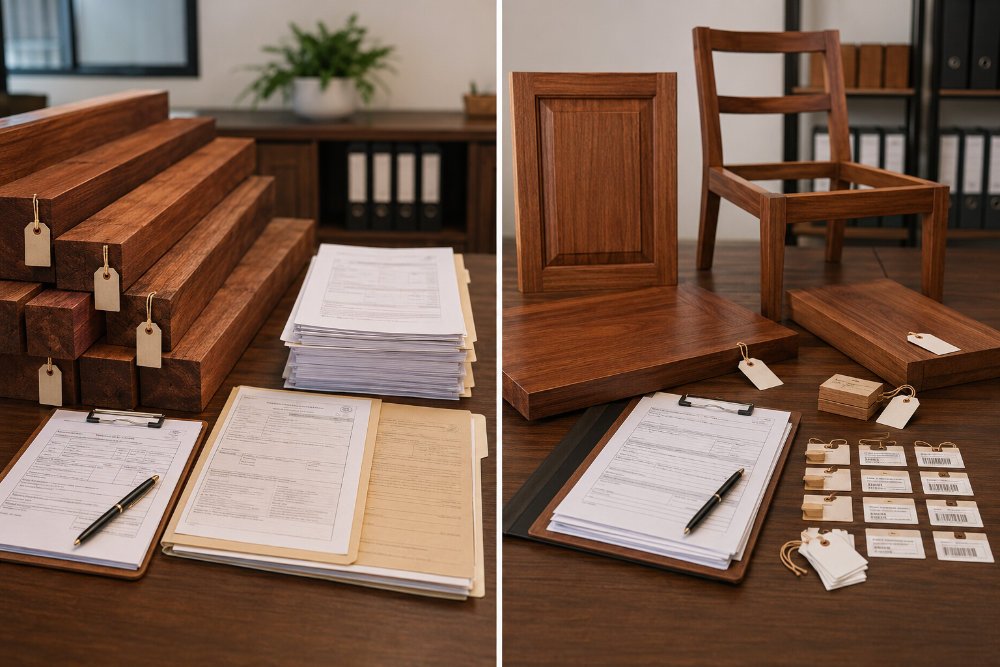
While SVLK and voluntary eco-certifications can both support a furniture order, they serve different primary purposes. SVLK focuses heavily on mandatory legality within Indonesia's timber framework, whereas voluntary systems focus on broader environmental sourcing claims.
| Comparison Point | SVLK (Mandatory Legality) | Voluntary Systems (e.g., FSC) |
| Primary purpose | Verify timber legality under the Indonesian system | Support specific eco-friendly sourcing claims |
| Focus | Legal origin, transport, processing, and trade | Material identification and chain-of-custody |
| Legal compliance | Main purpose for export | Does not replace local legal requirements |
| Traceability | Tracks timber through Indonesia's legal supply chain | Tracks specific materials through certified networks |
| Typical buyer requirements | Essential for Indonesian sourcing and export documentation | Niche retail policies and specific green tenders |
| Proof of furniture quality | No | No |
Your correct choice ultimately depends on your destination market, your customer's internal policies, and the specific claims you want to make. Almost all buyers need SVLK documents to import smoothly, while only a segment requires additional voluntary materials.
Which Certifications Actually Matter for Your Business?
For Furniture Retailers
Retailers need to ensure their supplier's documents perfectly match the claims made on product tags and marketing materials. If you plan to market a collection under a specific green label, confirm that the actual physical products and commercial invoices will carry the exact right claim.
Simply stating that a factory has "green credentials" isn't enough. Always check the availability of specific materials by wood species, as a factory might not offer them for every single product line.
For Hospitality and Commercial Projects
Hotels, restaurants, and corporate offices typically embed strict sourcing rules directly into their tender documents. Alongside legal timber, they frequently demand additional compliance for finishing toxicity, emissions, fire resistance, and structural durability.
To ensure your materials and finishing systems can survive heavy daily use, we highly recommend reading our Indonesian mahogany durability guide for commercial spaces. Remember, certification proves where the wood came from, not how long the chair will last in a busy lobby.
For Environmentally Conscious Brands
If your brand is built on strict eco-sourcing commitments, you must communicate this heavily during the supplier screening phase. It is critical to confirm your required material availability before you approve a prototype to avoid unexpected delays.
Always explicitly state the required wood species, acceptable certification claims, and necessary supporting documents on your Purchase Order to avoid any costly miscommunications.
For Private Label and OEM Programs
Custom OEM manufacturing often blends solid wood with non-wood components like metal, upholstery, or rattan. Because of this, private label buyers need absolute clarity on material records and production capabilities.
Discuss these requirements early. Since MPP Furniture offers free product development and consultation, you can map out material sourcing, custom specifications, accurate costing, and documentation right from day one.
Certifications Are Important, But They’re Not the Whole Story
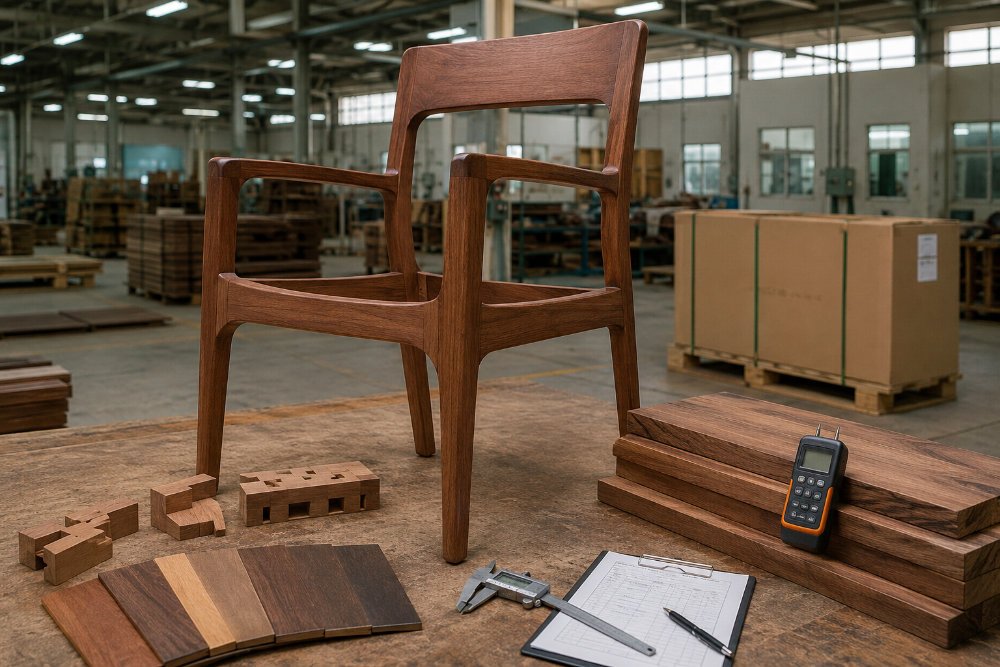
Manufacturing Quality
A legally verified piece of wood can still split if it isn't dried properly. Certifications won't tell you if the joinery can handle years of repeated use. Before committing, you must evaluate a factory's moisture-control protocols, construction techniques, sanding precision, and finishing standards.
Product Consistency
Producing one stunning showroom sample is easy; replicating it 500 times is the real challenge. Ask your potential factory how they control dimensional accuracy, color matching, and finishing standards across multiple repeat orders. For a deep dive into how wood selection and structural joinery affect your final export quality, explore our comprehensive Indonesian mahogany furniture buyer's guide.
Production Capacity
Verify exactly which manufacturing processes are handled in-house versus outsourced. You need to know their realistic monthly container capacity and how they juggle mixed or repeat orders without dropping the ball.
Quality Control Systems
A reliable manufacturing system embeds quality checks at every single stage from raw material prep and machining to final assembly, finishing, and packing. By combining traditional handcrafting techniques with rigorous production-stage inspections, MPP Furniture consistently delivers accurate custom dimensions and flawless finishes for our B2B partners.
Communication and After-Sales Support
Great manufacturing is backed by great communication. This means clear written approvals, continuously updated spec sheets, proactive production reports, and fast, honest responses if things go wrong. Ask your supplier upfront how they handle specification changes, defect complaints, or replacement parts.
A dependable Indonesian partner will be entirely transparent about what their documents actually cover and what they don't. In B2B sourcing, honest operational answers always beat vague marketing claims.
Questions to Ask an Indonesian Furniture Manufacturer
Which Compliance Documents Does Your Company Hold?
Don't just ask for a generic name. Request the official certificate title, the exact certificate-holder name, registration number, issuing body, and expiration date. Crucially, verify that the company name on the certificate exactly matches the business entity you are paying.
Can You Provide Valid Export Documentation?
Always request the full, unedited documents rather than a cropped screenshot or a generic website badge. Cross-reference the provided data to ensure your specific product group is legally covered for international shipping.
Are Specific Materials Available for All Product Lines?
Never assume. Explicitly confirm that your required wood is available for the exact species and furniture designs you plan to order. Be sure to ask how this requirement might affect minimum order quantities (MOQs), overall costs, and production lead times.
How Do You Maintain Traceability Throughout Production?
Ask the factory to explain their floor operations: how are materials physically separated, labeled, and tracked? They should also clarify exactly how the legality claim will be printed on your quotations, commercial invoices, and packing lists.
Can You Support Customer-Specific Compliance Requirements?
Provide your retailer sourcing policies or specific destination-market regulations before the sampling phase begins. Giving the manufacturer this roadmap early allows them to identify any missing tests or documentation well before they threaten your delivery schedule.
Why Many International Buyers Choose Certified Indonesian Furniture Manufacturers
Indonesia is a strategic hub for commercial buyers, consistently ranking among the top global furniture suppliers. Partnering with legally compliant manufacturers guarantees global standards and high-quality output. Here is why international brands trust Indonesia for their custom furniture needs.
Strong commitment to legal timber sourcing
Indonesia's SVLK system successfully transformed the industry, combating a past where 80% of timber exports were illegally sourced. Today, this transparent tracking system uses independent third-party audits to guarantee that your wood products come from legal, sustainably managed forests. This rigorous standard holds widespread recognition in major international markets like the EU and Australia, ensuring your supply chain easily meets strict global laws.
Growing focus on sustainability
Beyond basic legality, the Indonesian furniture industry is increasingly aligning with broader eco-conscious market demands. This shift allows buyers to confidently develop custom mahogany lines that complement their brand's own green initiatives. You get to deliver luxury products to your market while maintaining strict environmental responsibility.
Export experience serving global markets
Indonesian furniture suppliers possess extensive experience navigating international trade and complex export requirements. Compliant factories with decades of manufacturing experience know exactly how to handle container shipping, customs clearance, and market-specific packaging. This operational maturity guarantees fewer logistical headaches and smoother deliveries for your commercial projects.
Reliable long-term manufacturing partnerships
Scaling commercial furniture production requires a true manufacturing partner that maintains direct factory control without outsourcing. For instance, MPP Furniture leverages its fully in-house production facility to ensure batch-to-batch consistency, achieving a remarkable defect rate of just 0.54% in 2024. This rigorous approach to quality control builds a robust foundation of trust, turning a reliable supplier into a valuable extension of your own team.
Key Takeaways About Indonesian Furniture Certifications
- SVLK guarantees legal timber sourcing and traceability under Indonesia's national laws, which is essential for export. Importantly, these systems track origin and legality but do not guarantee the physical quality of the furniture itself.
- Always verify the certificate holder, validity status, and material availability before committing to an order. Then, look beyond the paperwork to evaluate the factory's production systems, quality control metrics, capacity, and communication habits.
- Working with an experienced manufacturer makes it significantly easier to align your custom designs with material sourcing and export documentation. Discuss your compliance needs early so they are accurately reflected in your samples, quotes, and purchase orders.
FAQs About Indonesian Furniture Certifications
1. What is the most important certification for importing Indonesian furniture?
The SVLK (Timber Legality Assurance System) is the most critical requirement. It is Indonesia's national system that verifies timber legality and is essential for smooth customs clearance in major global markets.
2. Is FSC required to export Indonesian furniture?
No, FSC is a voluntary certification and is not a mandatory requirement for exporting furniture from Indonesia. SVLK is the legally required standard for export.
3. Do SVLK or voluntary certifications prove that furniture is high quality?
No. These certifications only track timber legality and material origin. They do not evaluate moisture content, structural joinery, finish durability, production capacity, or on-time delivery performance.
4. Can custom mahogany furniture be exported safely without voluntary certifications?
Yes. As long as the manufacturer holds valid SVLK documentation, your custom mahogany furniture complies with Indonesian export laws and is recognized as legally sourced by major international markets like the EU, UK, and Australia.
Ready to Manufacture Your Custom Mahogany Furniture?
To start planning your legally compliant and high-quality furniture line, explore MPP Furniture's custom manufacturing capabilities or contact us directly to discuss your OEM and private-label needs.

I am a Web Designer, Technical SEO Specialist, and writer with 6+ years of experience in website optimization and search visibility. For more than a year, I have supported MPP Furniture’s growth, and I am currently expanding my role as an author to help B2B furniture buyers make more informed business decisions through informative, practical, and impactful articles.
0 Comments