Natural mahogany has its own grain, undertone, and character, so slight color differences are normal. Still, buyers are right to expect a bulk order to look coordinated when the pieces are displayed in one showroom, retail collection, or commercial project.
A skilled mahogany furniture manufacturer can keep those differences within an approved visual range. This is done by controlling the timber, moisture level, surface preparation, finish formula, application method, and inspection process.
This article explains what causes color differences, how manufacturers manage them, and what buyers should check before approving production. It also covers repeat orders, where matching an earlier shipment can be more difficult.
Why Color Consistency Matters for Bulk Furniture Orders
Retailers and project buyers often place many pieces in the same room or product display. A small tone difference may go unnoticed on one chair, but it becomes clear when twenty chairs or several cabinet doors sit side by side.
Furniture color consistency also supports product photography, showroom planning, and brand presentation. When delivered furniture looks far from the approved sample, buyers may face customer complaints, replacement requests, or project delays.
A dependable Indonesian mahogany furniture manufacturer treats color as part of the product specification. It should be discussed before production, not after the container arrives.
What Causes Color Variations in Mahogany Furniture?
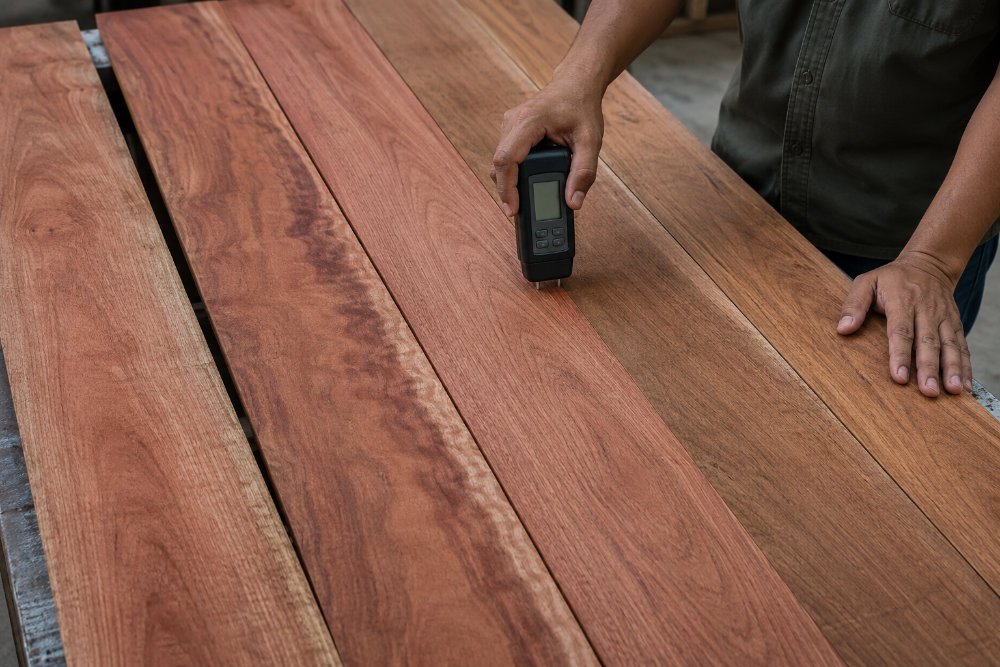
Natural Differences in Wood Grain and Tone
Mahogany can show red, brown, pink, or warm orange undertones. Grain direction also changes the way light reflects from the surface, so two boards with the same stain may still look slightly different.
Mahogany generally accepts stain evenly because of its fine texture and pore structure. Still, its natural figure and color cannot be made completely identical without hiding the wood under an opaque coating.
For a deeper understanding of these unique raw material traits, buyers can explore our comprehensive mahogany wood insight.
Moisture Content and Wood Preparation
Wood with uneven moisture levels may react differently during sanding and furniture finishing. It may also move after production, which can affect joints, panels, and the coating surface.
MPP’s buyer reference uses a kiln-dried moisture target of 10 to 12% for indoor mahogany furniture. This target supports stable production and more predictable finishing results.
Staining and Finishing Techniques
Sanding grit, sanding pressure, stain concentration, spray distance, coating thickness, and drying time can all change the final appearance. Even gloss level matters because a shinier surface may look darker under the same lighting.
A controlled finishing process usually follows an approved sequence, such as stain, sealer, and topcoat. Each stage needs the same preparation and application standard across the production run.
Differences Between Production Batches
Separate batches may use timber from different harvests, suppliers, or storage periods. Finishing materials may also come from later production lots, which can create small shifts in tone.
This risk becomes greater with repeat orders placed months after the first shipment. Good records and retained finish references help the factory move closer to the original result.
How Mahogany Furniture Manufacturers Achieve Consistent Color
Careful Wood Selection and Grading
The process starts before any stain is applied. Timber should be sorted by species, undertone, grain pattern, density, and visible defects.
Boards with a similar appearance can then be grouped for one product or collection. This is especially useful for tabletops, cabinet doors, headboards, and other large surfaces where differences are easy to notice.
Proper Kiln Drying Before Production
Kiln drying brings the timber into a controlled moisture range before machining and assembly. Workers should also test the wood before it enters production rather than relying only on the drying schedule.
A stable moisture level helps the wood respond more evenly during sanding and coating. It also lowers the risk of later movement that may disturb the finished surface.
Standardized Stain Formulations
An approved stain should be recorded with clear mixing and application instructions. The factory may record the material type, mixing ratio, number of coats, drying period, and target gloss.
This makes the result less dependent on memory or one worker’s personal method. At MPP Furniture, we take this precision a step further by partnering with trusted coating suppliers like Propan to formulate our color mixes. Relying on their factory-standardized tinting guarantees that our finishing team always works with a mathematically precise, repeatable reference for every bulk production run.
Controlled Finishing Processes
Surface preparation should follow the same sanding sequence for all matching components. Dust removal, stain application, sealing, topcoat application, and curing should also follow one agreed method.
MPP’s mahogany references describe multi-stage coating and in-house finishing control. This production setup gives the factory more direct oversight from timber preparation to final inspection.
Color Sample Approval Before Mass Production
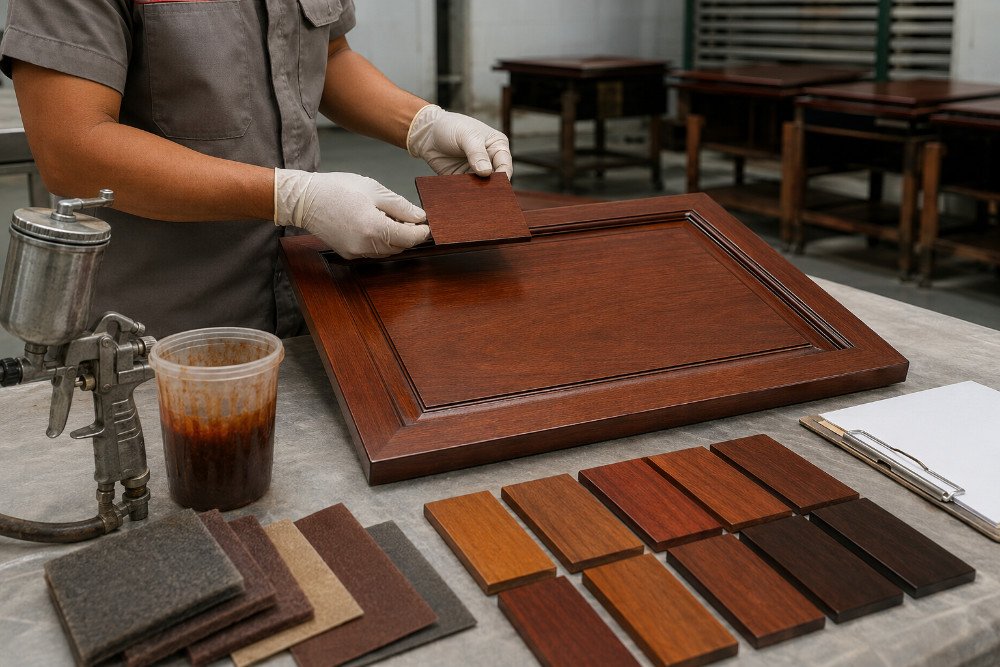
Buyers should approve a physical finish sample made on mahogany, not rely only on a phone photo or digital color code. Screens, cameras, and room lighting can make the same finish look different.
The approved panel should show the target tone, texture, gloss, and amount of visible grain. A physical sample gives both the buyer and factory a shared visual standard.
In our experience, the most successful bulk orders start with a hands-on review. Many buyers, or their appointed QC agents, visit the MPP facility directly to approve physical color swatches before production begins. This direct sign-off completely eliminates digital guesswork and sets a clear standard for the entire run.
Batch-to-Batch Quality Control Inspections
Production pieces should be compared with the approved sample during finishing and before packing. Inspectors should pay close attention to items that will be displayed together.
Furniture that falls outside the accepted color family should be separated for correction or review. This is more practical than expecting every natural board to look exactly the same.
Why Color Consistency Is Especially Important for Retailers
Maintaining a Consistent Brand Image
Retail collections are often presented as one coordinated family. Tables, chairs, cabinets, and consoles need to feel related even when their grain patterns are not identical.
Stable colors also help retailers build recognizable collections across stores, catalogs, and online channels. For insights on navigating bulk orders, read our article on the mahogany furniture catalog and wholesale pricing. Buyers can also learn more about mahogany's place in a product range through this mahogany furniture buyer's guide.
Reducing Customer Complaints and Returns
In fact, industry research by Invesp reveals that 22% of all product returns happen simply because the physical item looks different from its photos. For furniture retailers, an inconsistent mahogany finish isn't just a minor aesthetic flaw; it is a logistical nightmare that takes a direct hit to your bottom line. Choosing a manufacturing partner with strict color control is a calculated move to protect your profit margins from the heavy logistics costs of unnecessary returns.
That is because customers may accept natural grain differences, but obvious color mismatches can look like poor production. This may lead to returns, discounts, or negative reviews even when the furniture is structurally sound.
Clear sample approval also reduces disputes. Both sides know what appearance was accepted before full production began.
Supporting Showroom Displays and Product Photography
Furniture shown online should be reasonably close to the delivered product. Large differences can create a gap between customer expectations and the actual order.
Showroom displays also make variation easier to notice because many pieces sit under the same lighting. Coordinated production helps the collection look planned rather than mixed.
Meeting Hospitality and Commercial Project Specifications
Hotels, restaurants, offices, and residential projects may use the same finish across many rooms. Designers need those items to follow the approved material schedule.
Surface durability also matters in these settings, so color control should work together with a suitable coating system. The article on mahogany durability for commercial spaces explains this use case in more detail.
Why Experienced Indonesian Manufacturers Deliver More Consistent Results
Skilled Finishing Specialists
Experienced workers understand how mahogany reacts to sanding, stain, sealer, and topcoat. They can spot undertone differences before those differences become more visible after coating.
Hand skills remain important, but they work best with written standards and controlled machinery. This combination supports both natural craftsmanship and repeatable output.
Standardized Production Procedures
A reliable factory uses the same production sequence across approved orders. Material checks, sanding standards, finish records, curing periods, and inspection points should not change without buyer approval.
True color consistency is hard to achieve if a supplier outsources their processes to smaller workshops. It requires complete oversight under one roof. For example, by operating a fully in-house 16,000 m² facility, MPP Furniture controls every single step from timber grading to final export packaging.
Backed by over 20 years of manufacturing experience, this direct approach allows them to reliably scale up to 30 containers a month while keeping the defect rate remarkably low at just 0.54%.
Dedicated Quality Control Teams
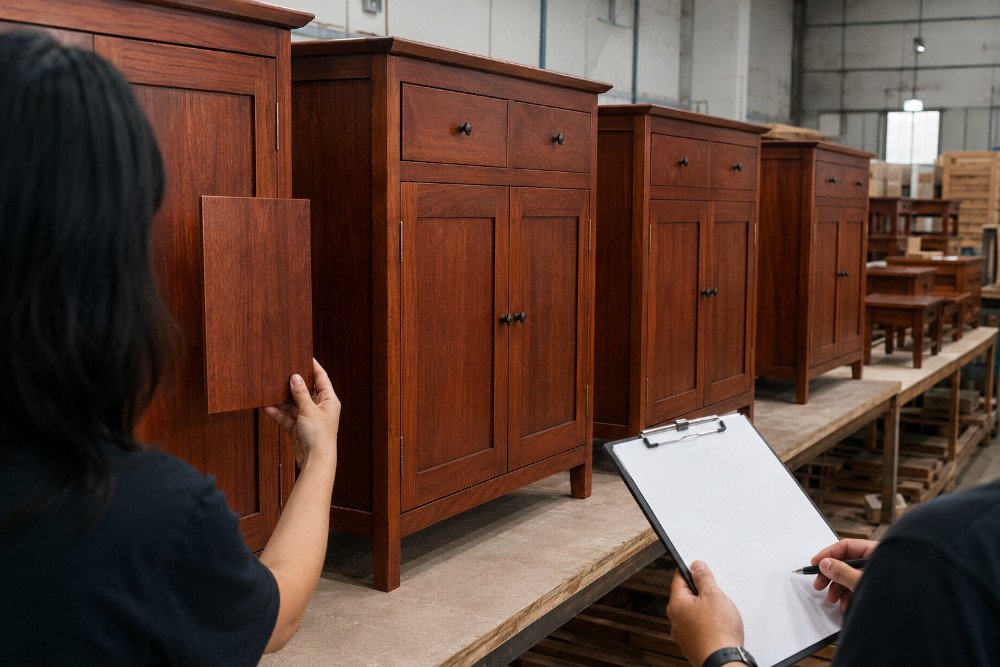
Quality checks should happen during production, not only at the end. Early inspection gives the team time to correct color, sanding, or coating issues before packing. This proactive approach should be viewed together with its process controls, inspection system, and ability to manage production in-house.
Experience Serving International Retailers and OEM Brands
Export buyers often need custom colors, private labels, exclusive designs, and repeat orders. Experienced factories understand that a successful sample is only the first step.
MPP offers free consultation, free product development, and custom design support for B2B orders. Buyers can discuss these services with an Indonesian furniture supplier before developing the first finish sample.
Key Takeaways for Buyers Ordering Mahogany Furniture in Bulk
Natural color and grain differences are part of solid mahogany furniture. The goal is to keep those differences within a visual range that the buyer has reviewed and accepted.
Wood grading, moisture control, standard sanding, recorded finish formulas, physical samples, and inspections all support better color matching. Repeat orders also need stored references and clear production records.
Before placing a bulk order, ask how the factory approves samples and controls color variations. A transparent supplier protects your brand experience and helps you avoid other common mistakes sourcing mahogany furniture from Indonesia.
Read also: How to Order Teak Garden Furniture in Bulk from Indonesia
FAQs About Mahogany Furniture Color Consistency
1. Can solid mahogany furniture have exactly the same color?
No. Natural mahogany contains differences in grain and undertone, so every piece will not look identical. A qualified manufacturer keeps those differences within an approved visual range.
2. Does moisture content affect mahogany furniture color?
Yes. Moisture can affect sanding, stain response, coating behavior, and later wood movement. The timber should be tested before machining and finishing.
3. How does a manufacturer match bulk furniture to an approved sample?
The factory controls wood grading, sanding, stain preparation, coating application, curing, and inspection. Finished pieces are then compared with an approved physical sample or QC panel.
4. Why can a repeat order look different from the first shipment?
A repeat order may use timber and finishing materials from later batches. Retained samples, recorded formulas, finish codes, and a new confirmation sample can reduce the difference.
5. Is every color difference a furniture defect?
No. Small differences in grain and tone are normal in solid wood. A problem exists when the finished furniture falls outside the appearance range accepted by the buyer.
Ready to Order Consistent Mahogany Furniture in Bulk?
To start planning your next mahogany collection with reliable color consistency, explore MPP's product ranges or contact us to discuss custom finishes, OEM development, and bulk production.

I am a Web Designer, Technical SEO Specialist, and writer with 6+ years of experience in website optimization and search visibility. For more than a year, I have supported MPP Furniture’s growth, and I am currently expanding my role as an author to help B2B furniture buyers make more informed business decisions through informative, practical, and impactful articles.


0 Comments