Mahogany furniture price is often higher than the price of furniture made from more economical wood species. However, a higher unit cost does not automatically mean that mahogany living room furniture is too expensive or commercially unsuitable.
Retailers should evaluate the finished product rather than judging the material by name alone. Product size, material volume, construction, visible wood usage, target customer, landed cost, retail positioning, and expected margin all influence whether mahogany makes commercial sense, and an experienced Mahogany Furniture Manufacturer should review these factors before preparing a quotation.
The real commercial question is whether the additional cost creates value that customers can see, understand, and accept. This guide explains what affects mahogany living room furniture cost, which product types benefit most from visible mahogany, and when a more economical material specification may deliver a better business result.
Is Mahogany Furniture Expensive? Judge Price by Commercial Value
There is no single answer for every product. Buyers first need to separate material price, finished furniture cost, and commercial value.
- Material price refers to the cost of the wood itself.
- Finished furniture cost includes dimensions, material volume, construction, labor, hardware, upholstery, packaging, order quantity, and production requirements.
- Commercial value is the benefit the finished product creates for the retailer and its target customer.
A console with broad, visible mahogany surfaces may give customers a clear reason to accept a higher retail price. In contrast, a fully upholstered chair may contain mahogany inside its frame, but customers may never see or recognize the material difference.
As explained in Harvard Business Review’s value-based pricing framework, pricing should begin with the value a defined customer sees in a product, rather than relying only on production cost and a standard markup.
Mahogany becomes commercially expensive when the additional cost does not support a stronger product offer, an acceptable retail price, or enough margin for the retailer.
What Influences Mahogany Living Room Furniture Cost?
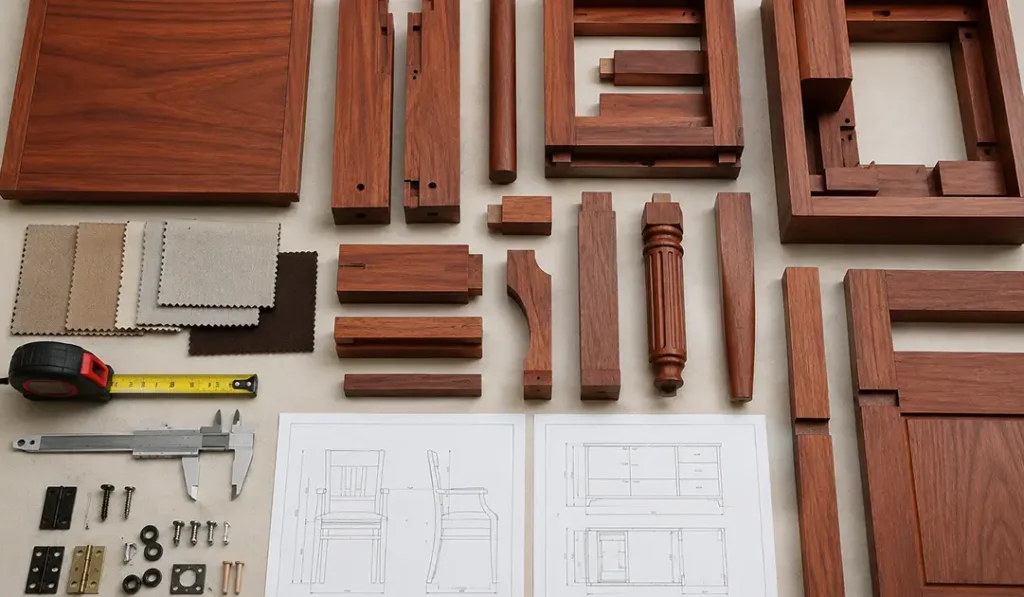
The mahogany furniture cost of a finished product depends on more than the wood species.
Product Size and Material Volume
Larger furniture usually needs more timber, but size alone does not tell the full story.
A side table may use less mahogany than a lounge chair with thick arms and a broad frame. Two products with similar dimensions may use different wood volumes because one uses slim parts while another uses solid sides and thicker rails.
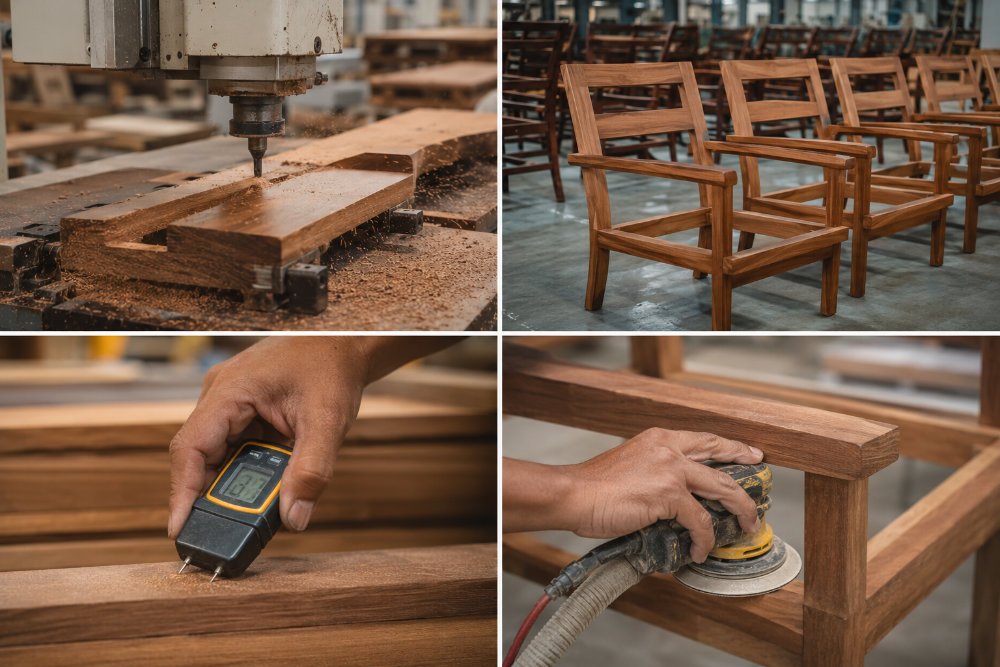
A manufacturer needs dimensions, component size, frame structure, and quantity before preparing a reliable quotation. MPP Furniture also checks material availability and required wood volume before accepting a production order.
Visible and Hidden Material Usage
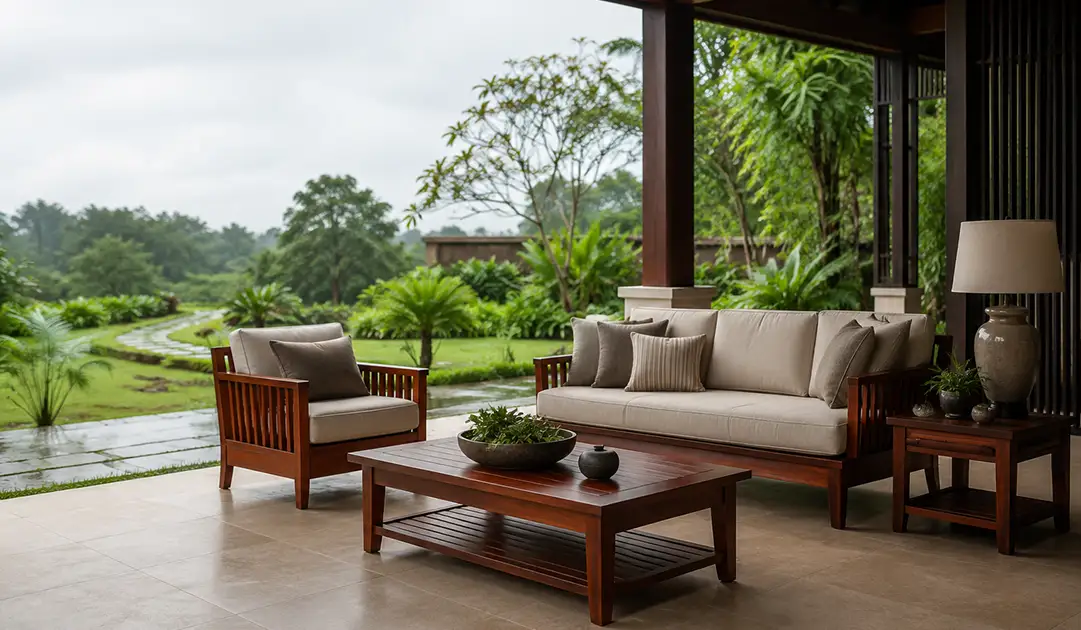
Visible mahogany is easier for customers to recognize and value. A coffee table, console, cabinet, or exposed chair frame gives retailers a clear sales explanation.
Hidden mahogany may still serve a construction purpose, but customers may not understand the higher price when the wood is covered. Hidden material should have a clear structural or commercial reason.
Construction and Production Requirements
A simple table frame does not require the same planning as a curved chair, wide sofa, or storage cabinet. Load-bearing areas, joint count, frame shape, and mixed materials can change wood use and production time.
A product cannot be priced accurately from a photo and wood name alone. The quotation must reflect how the furniture is built and how much material the design requires.
An experienced Indonesian Furniture Manufacturer should review these cost drivers together because material volume, construction, and order specifications affect the same finished quotation.
How Product Type Changes the Value of Mahogany
Mahogany does not create the same value in every living room category.
Tables, Consoles, and Storage Furniture
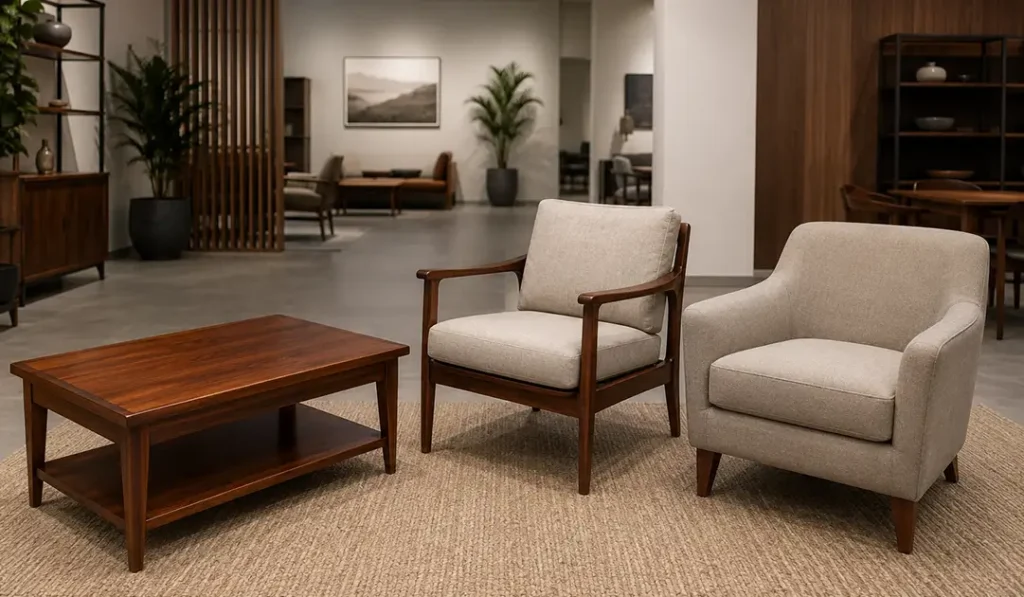
Coffee tables, side tables, consoles, shelving, and cabinets often show a large amount of wood. Mahogany is easier to justify when these visible parts support the product identity.
Storage products need closer review because shelves, doors, drawer fronts, side panels, and internal structures can raise material use. Oversized parts may push the item beyond its intended retail price.
A smaller console may create a clear solid wood impression without using the same wood volume as a large cabinet.
Exposed-Frame Chairs and Sofas
MPP has supplied living room chairs and tables to buyers in the United States and has samples showing how exposed wood can shape product identity.
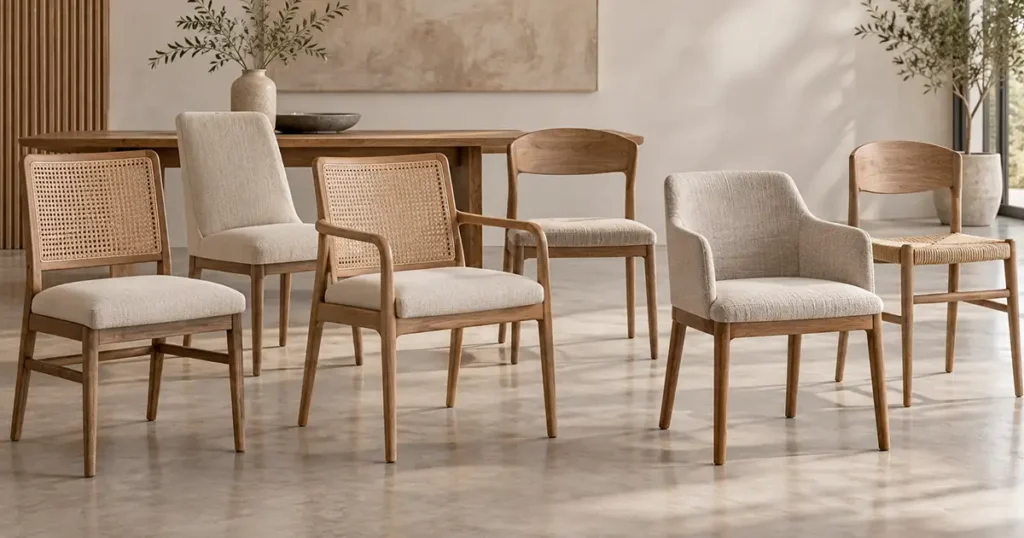
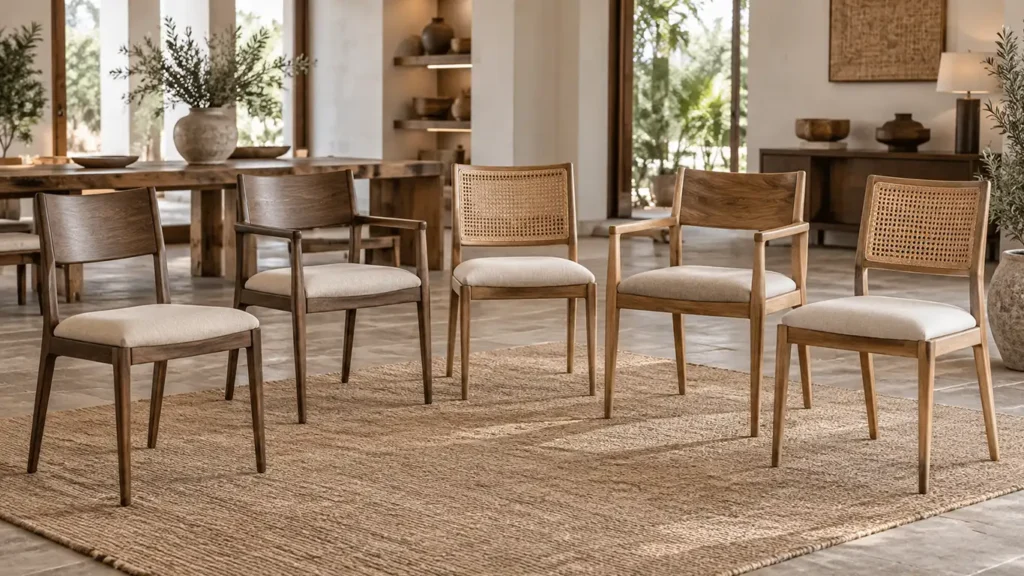
On an exposed-frame chair or sofa, arms, legs, side frames, and back rails support a visible solid wood message. But upholstery, comfort, dimensions, and proportions must support the same market position.
Fully Upholstered Seating
When most of a sofa or armchair frame is covered, customers may not know that mahogany is inside the product. Comfort, fabric, shape, and seating experience may influence the purchase more than the hidden wood.
Mahogany may then raise cost without increasing customer-perceived value at the same rate.
Using mahogany in a hidden frame is not always wrong. It may support a construction need or brand standard. But buyers should not use it by default when a more economical specification can support the same product offer.
When Does Mahogany Fit, or Not Fit, the Collection’s Price Position?
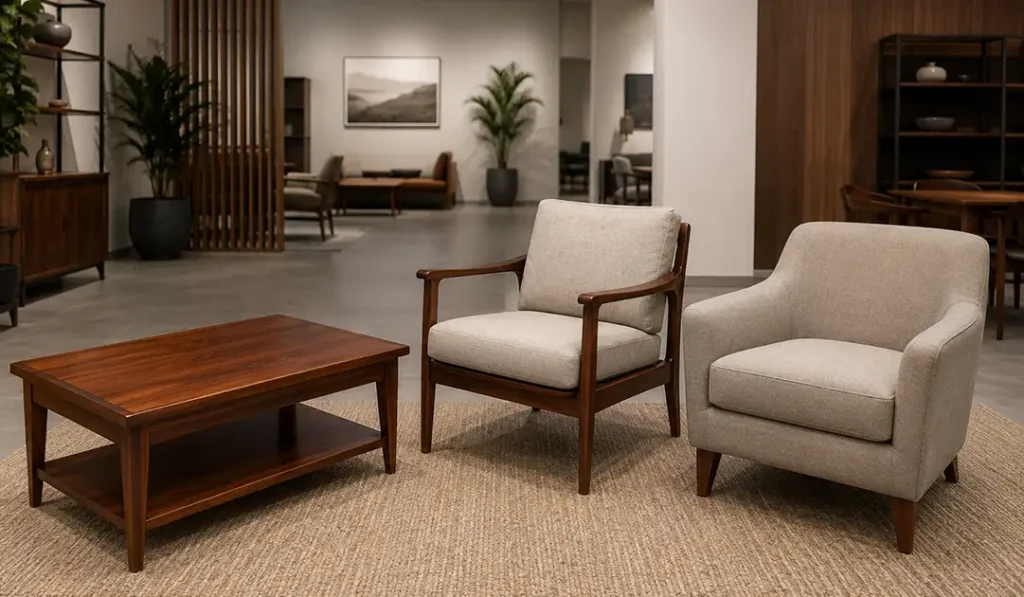
Mahogany should be assessed against the collection’s customer profile and intended price segment.
For an entry-level range, the added material cost may push a product above the acceptable retail price. In a mid-market collection, mahogany may work selectively on smaller tables, consoles, cabinets, or exposed-frame seating. In a mid-premium range, visible solid wood may have a larger role in the product story.
Retailers should review factory price, freight, import charges, warehousing, wholesale target, expected retail price, and margin together. A quotation that looks workable at factory level may become difficult after landed costs are added.
As noted in McKinsey’s analysis of retail price perception, retailers do not need the lowest price on every item. Mahogany should be judged by the role and customer value it adds to the full collection, not by material cost alone.
Mahogany may not be suitable when:
- Most wood parts are covered.
- Customers cannot recognize the material difference.
- Comfort, fabric, or silhouette drives the purchase.
- The target retail price is too low.
- The added cost reduces margin without helping the product sell.
A higher-cost material is not automatically the better choice. At the same time, choosing a material based only on the lowest initial price can create other business risks. Although outdoor furniture faces different conditions, MPP’s guide to choosing the wrong wood for patio furniture shows how material decisions can affect product performance, customer complaints, replacements, after-sales costs, and retailer margin. In both indoor and outdoor collections, the material should match the product use, customer promise, and intended price point.
MPP reviews the product type, customer profile, market position, and target price before quotation so the specification can be adjusted before sampling and bulk production.

A Six-Question Framework for Evaluating Mahogany Furniture Price and Value
Before approving a mahogany specification, buyers should ask:
1. How much mahogany does the product use?
2. Which wood sections will customers see?
3. Does the material improve the product proposition?
4. Does the target customer value visible solid wood?
5. Can the intended retail price absorb the added cost?
6. Will the product still provide a healthy margin?
More positive answers give a stronger commercial reason for using mahogany. When the material is mostly hidden, customer recognition is low, and the target price is tight, the specification should be reviewed before sampling.
What Buyers Should Define Before Requesting a Quote
A good quotation starts with product and market context, not only a reference image.
Buyers should prepare product type, dimensions, quantity, target customer, target wholesale price, expected retail position, visible wood sections, upholstered areas, construction expectations, and packaging needs.
MPP confirms these points before quotation because early discussion reduces communication errors.
A clear technical brief for a furniture manufacturer helps the factory judge whether mahogany fits the target price, whether visible material use should be adjusted, and whether another specification may offer a better business result.
Final Verdict: Is Mahogany Living Room Furniture Worth the Price?
Mahogany is worth the price when its use supports the product design, customer expectations, retail position, and retailer margin.
It becomes unnecessary when the material is hidden, does not affect customer preference, or pushes the product outside its intended range. The right material is the one that fits the product and its commercial target.
Discuss Your Mahogany Living Room Collection with an Indonesian Manufacturer
Share your product concept, dimensions, target price, customer profile, and retail position with MPP Furniture. The team can review whether mahogany is commercially suitable before quotation, sampling, and bulk production. MPP supports B2B buyers through free consultation, free product development, exclusive custom design services, full in-house production, and quality control at each production stage. The company reports a 99% client satisfaction rate and a complaint ratio of 0.56%.
Mahogany Furniture Price FAQs
1. Why is mahogany furniture expensive?
Mahogany furniture cost is affected by product size, solid wood volume, component thickness, construction, labor, and order requirements. The wood name alone does not determine the finished price.
2. What affects mahogany living room furniture price?
The main factors are product dimensions, material volume, visible and hidden wood sections, construction needs, order quantity, and intended market position.
3. Is mahogany worth using for upholstered furniture?
It can be worth using when the wood remains visible or serves a defined construction purpose. When most of the frame is covered, buyers should check whether the added cost creates enough customer value.
4. Is mahogany suitable for an entry-level furniture collection?
It can suit selected products, but the finished cost must still fit the target retail price and expected margin. Product size and material visibility should be reviewed before quotation.
5. Does a higher mahogany furniture cost always mean better value?
No. A higher cost creates better value only when the material supports the product offer, customer expectations, retail position, and retailer margin.

A versatile content creator with a strong foundation in product photography and videography, and a comprehensive brand strategy. Capable of creating engaging content to connect consumers and producers, web analytics, and engaging visual content to drive interest and growth for a product or brand.

0 Comments